Landau, February 2, 2026
C H I L E
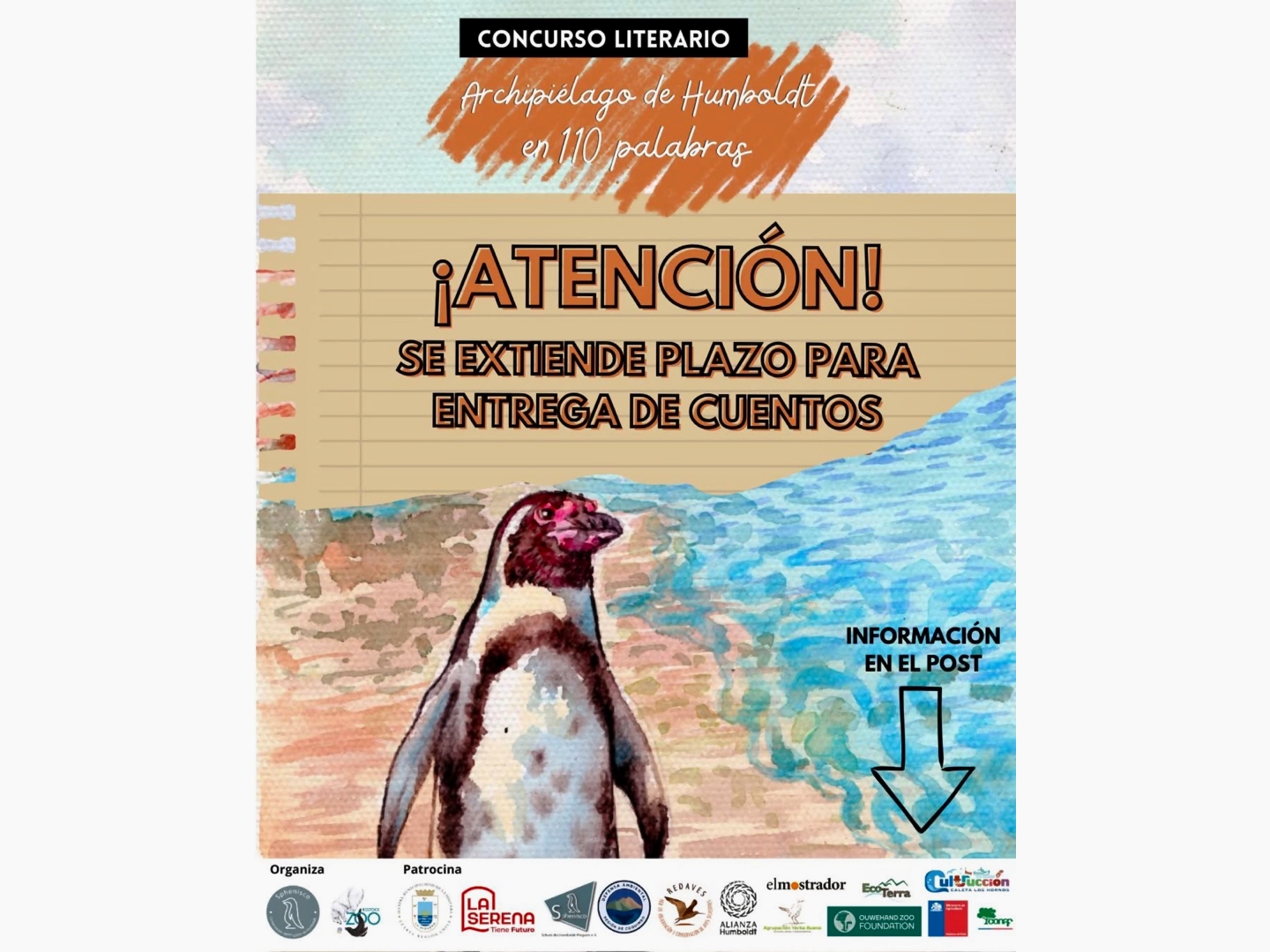
+++Literary competition “The Humboldt Archipelago in 110 words”+++
Following the great success of the literature competition in 2024, Fundación Sphenisco Chile announced that it would be holding the competition again at the end of 2025. The deadline for entries has now been extended to March 31, 2026. The winners can look forward to sailing trips to the Humboldt Archipelago (including a companion) and through the “Pingüino de Humboldt” nature reserve with observations of marine animals. The project is supported by the municipality of La Higuera, international organizations such as Sphenisco e.V., the sponsors Rostock Zoo and Ouwehand Zoo Foundation, as well as national and local organizations (see also article “Second Literature Competition...” from November 9, 2025).
+++Humboldt Penguin Natural Monument+++
The Chilean Ministry of the Environment plans to declare the endangered Humboldt penguin a “Monumento Natural,” or natural monument. This measure, together with the conservation plan (Recogeplan) (1), aims to better protect the endangered species from threats such as fishing, pollution, and climate change, and to consolidate its status as an emblematic species of the Humboldt Current ecosystem.
In Chile, important areas such as the breeding islands of Cachagua and Puñihui, as well as endangered plants and animals, are declared natural monuments. The classification is intended to improve the level of legal protection, strengthen security against threats from industry and/or pollution, and better protect critical areas such as breeding grounds and feeding areas. Currently, citizens are required by law to comment on the project by January, 30.
+++Photo exhibition “Exploring the Archipelago”+++
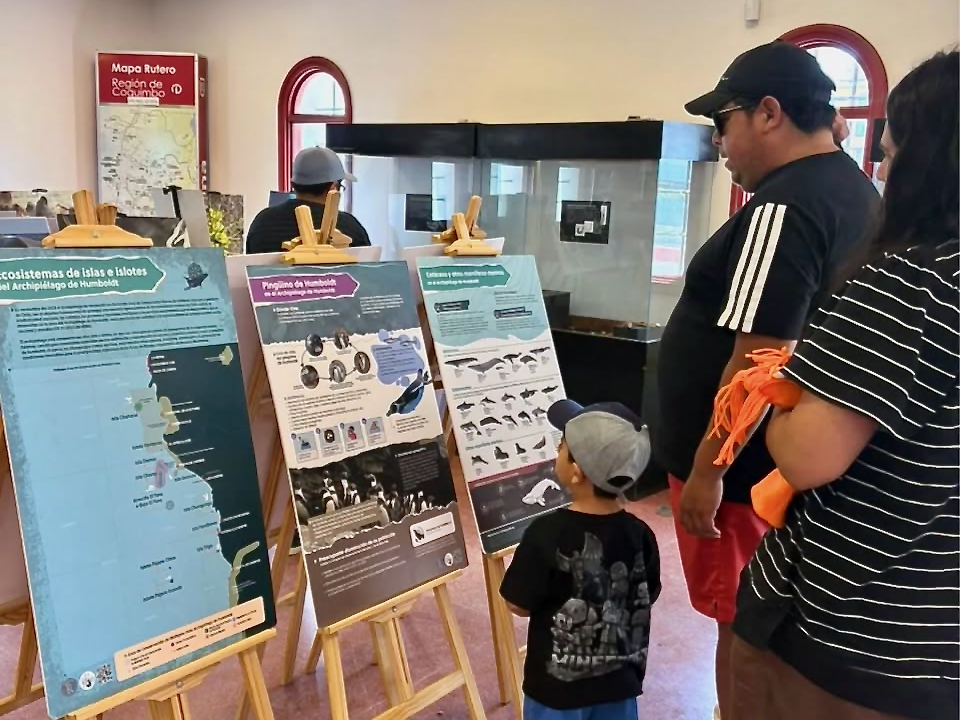
The photo exhibition “Exploring the Humboldt Archipelago: Source of Life for Humanity”
was on display on December 16 and 17, 2025, in the foyer of the Coquimbo municipal administration building in northern Chile.
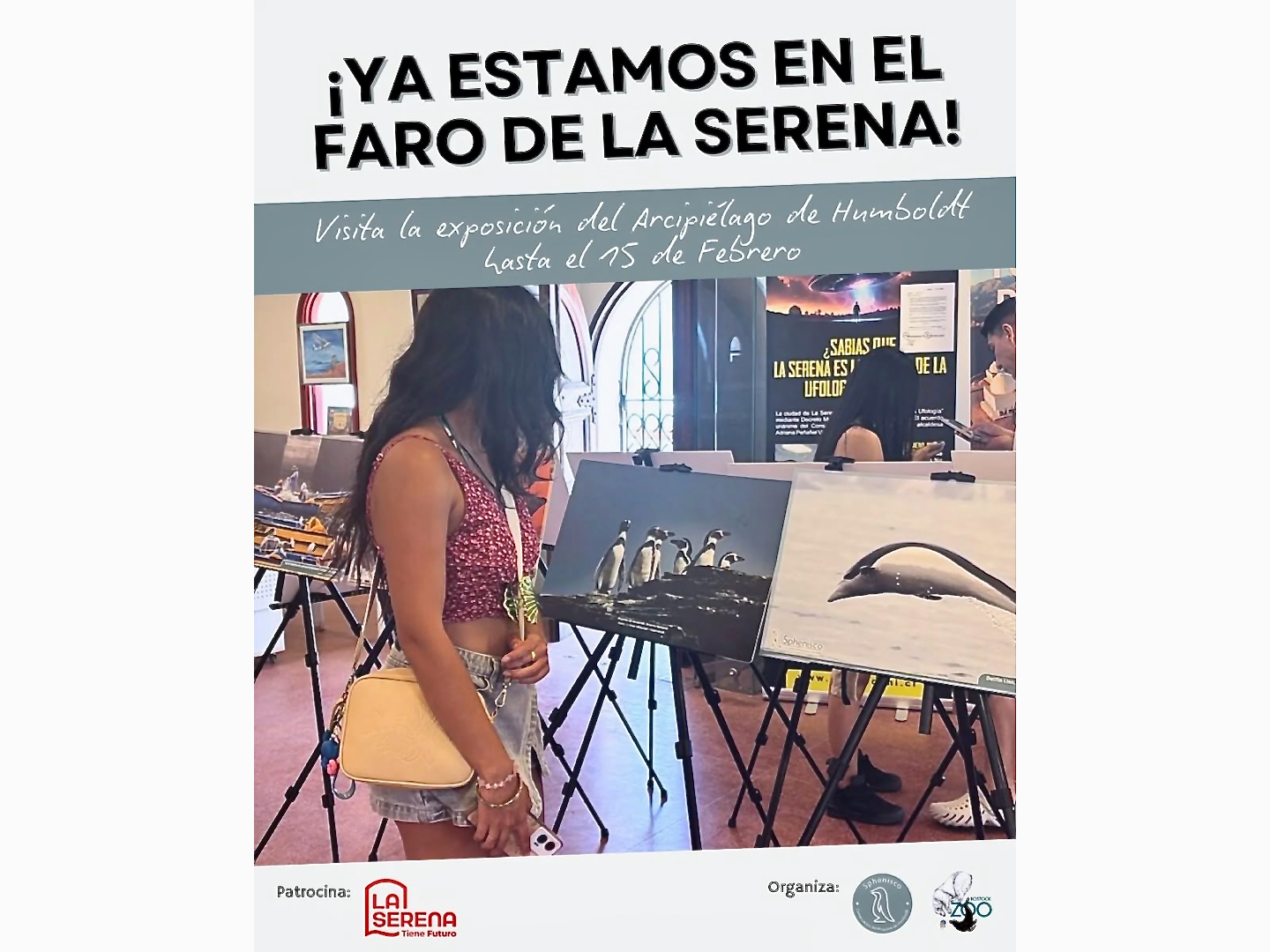
From January 15 to February 15, 2026 – during the peak tourist season – the Fundación Sphenisco Chile will present the exhibition at El Faro in La Serena. Photos and infographics will show why the Humboldt Archipelago is one of the most important hotspots and hope spots for biodiversity in Chile and worldwide. Currently, 900 to 1,000 people visit the exhibition every day (see article Penguin Awareness Day from January 22, 2026).
+++Humboldt Archipelago Management Plan+++
The information and consultation phase for the development of the management plan was completed in early November 2025. Since the beginning of the year, the plan for the Humboldt Archipelago marine protected area has been discussed with citizens and interest groups. Exclusive consultations with indigenous groups in the region have now also been completed. Species conservationists and environmentalists are eagerly awaiting the publication of the draft by the regional environment ministries. Once the draft has been published as required by law, the lengthy consultation process on the “management plan” could be concluded with submissions from citizens, NGOs, and other stakeholders. There are fears that this will not be possible before the change of government in March.
+++Research on foraging behavior+++
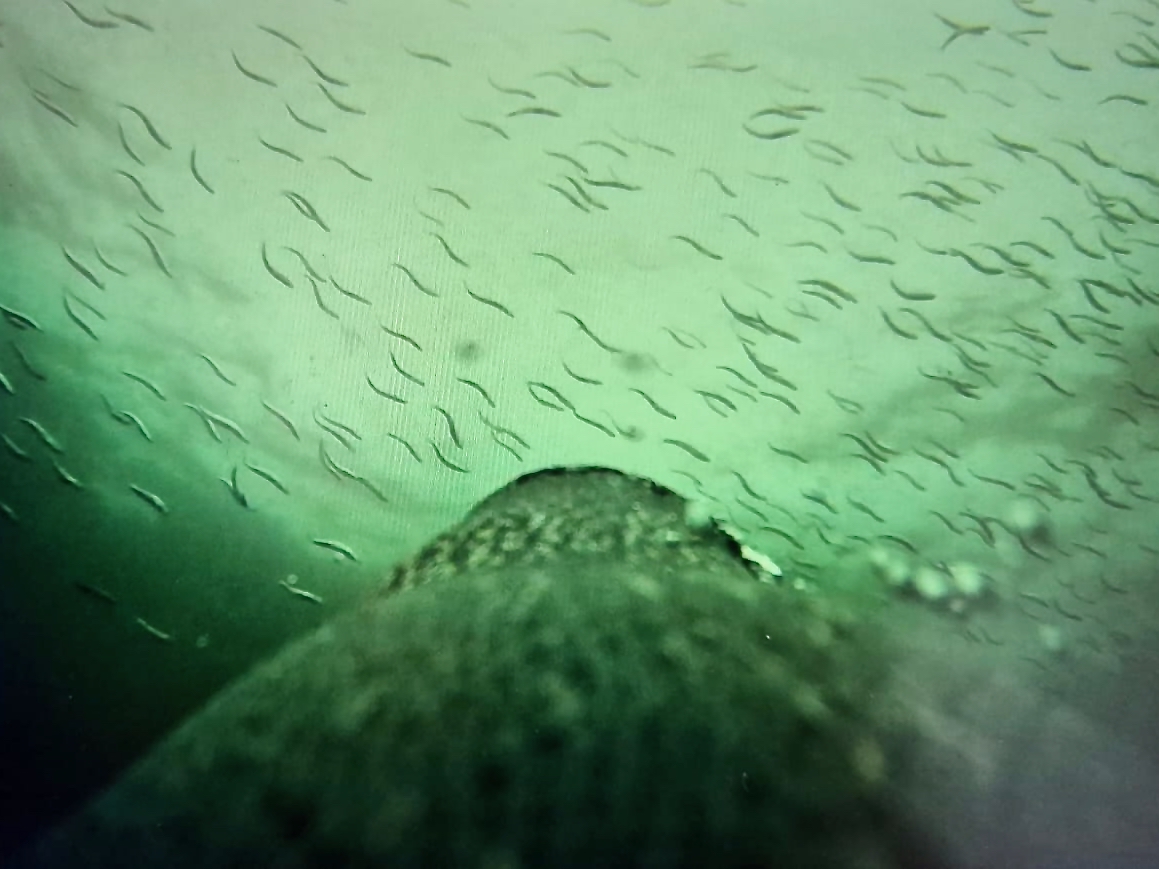
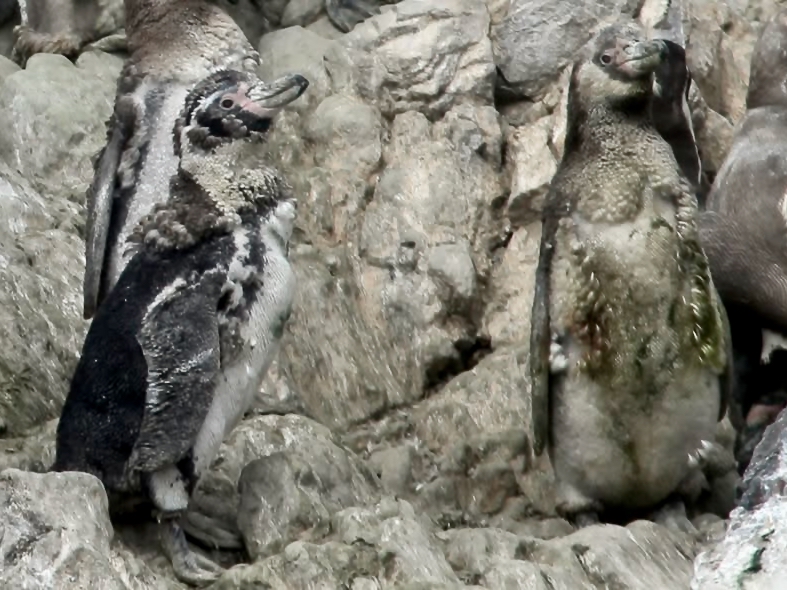
In November, Ursula Ellenberg (2), Paulina Acre, and Maximiliano Daigre continued their research on foraging behavior. The research was very successful. Ten GPS loggers were installed on Cachagua Island and five on Choros Island, and all of them were recovered with data. Unfortunately, the penguins on Pajeros Island were in such poor nutritional condition that tracking was not feasible. In addition, foraging behavior was once again documented with a small camera in the sea off Cachagua Island.
A report on the studies on population, breeding success, and foraging behavior for the period 2023 to 2025 is to be presented in early March 2026.
+++Marine protected area planned in the Valparaíso region+++
In the Valparaíso region, a regional committee has been formed to implement conservation measures, as provided for in the Humboldt Penguin Recovery, Conservation, and Management Plan (RECOGE) (1). The round table is an official instrument of the Ministry of the Environment and was organized by CONAF (Valparaíso Region), the Regional Secretary for the Environment, and the municipality of Zapallar. State institutions, non-governmental organizations, the Cachagua Fishermen's Union, Petrel Expediciones, and universities participated in its establishment (3). The aim of the committee is to prepare and coordinate conservation measures. These include, among other things, increased monitoring of protected areas, reducing competition for food with fisheries, environmental education, and the dissemination of scientific knowledge (4). At the founding meeting, Francisca Ravanal (5) pointed out, with reference to the breeding colonies in Cachagua and Pájaros Niños (Algarrobo), that "the Valparaíso region now plays a key role in conserving the Humboldt penguin population and promoting marine protection. She added: “Ideally, we want to move towards a network of marine protected areas that provides security for the few breeding colonies.” (6)
+++Another bribery scandal+++
Chilean media reported on a new bribery scandal in connection with the Dominga mining and port project run by Andes Iron. (See article “New bribery scandal – were court rulings bought in favor of Dominga?” dated January 9, 2026).
+++“Humboldt Archipelago” tourist information signs+++
The Fundación Sphenisco Chile has applied to the Ministry of Public Works (8) to install tourist information signs, e.g. on highways and at airports, to highlight the importance of the endangered Humboldt Archipelago and encourage people to visit it.
+++Penguin Awareness Day+++
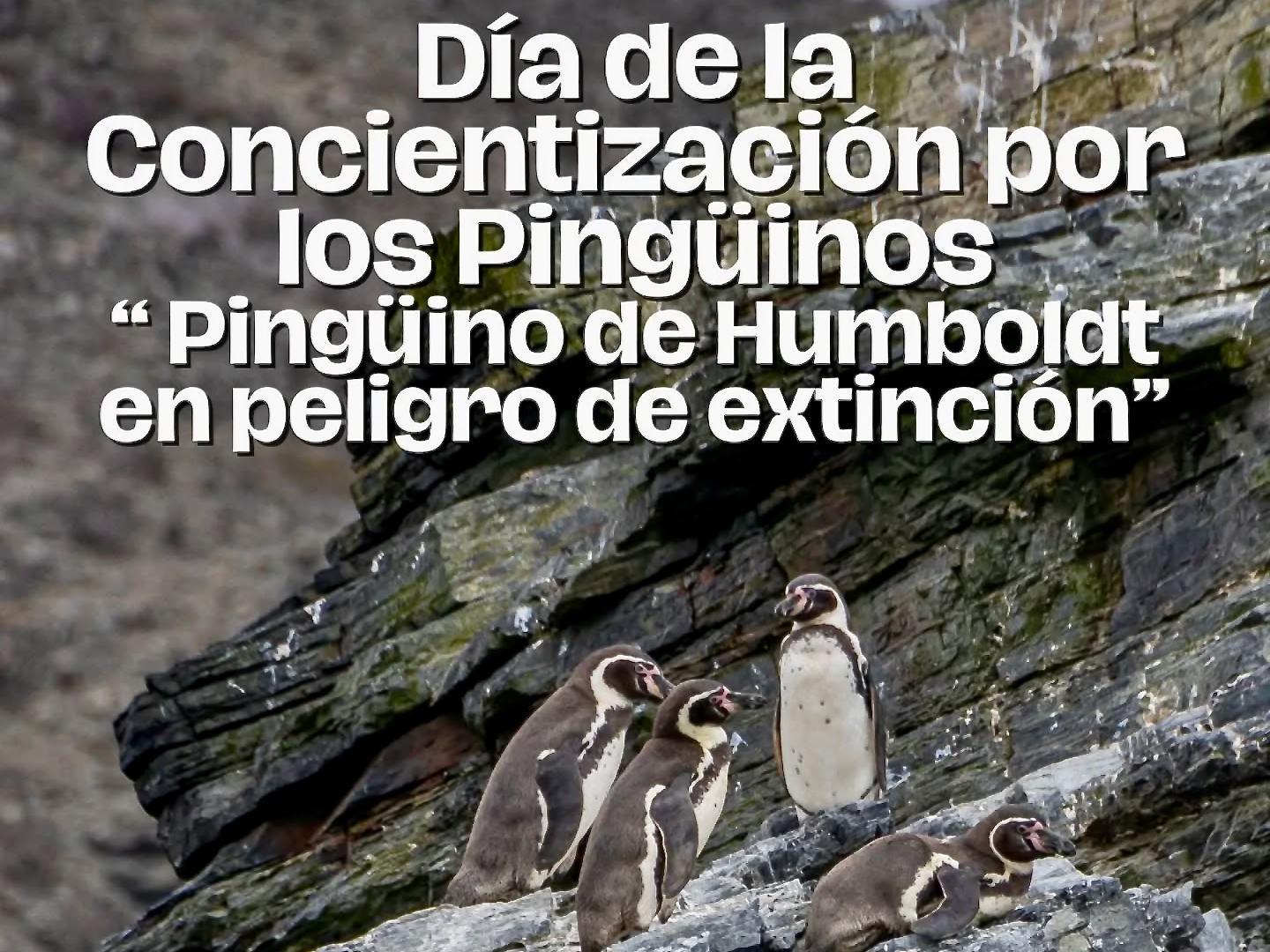
On Penguin Awareness Day, January 20, conservationists and scientists in South America once again provided information about penguins. As on World Penguin Day in April, they drew attention to this fascinating species, a marvel of evolution, and the threat of extinction facing some penguin species (see article Penguin Awareness Day from January 22, 2026).
P E R U
+++Moulting count in Peru+++
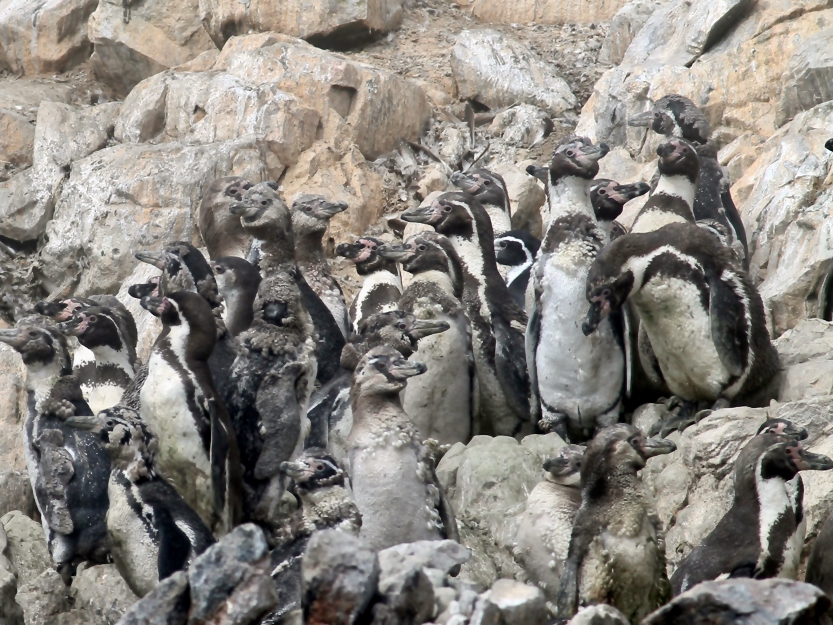
In January, the NGO Acorema announced: "As every year at this time, we are starting the moulting count. Over the next two weeks, moulting Humboldt penguins will be counted in all Peruvian breeding colonies. The count seems simple, but it requires a lot of staff to record all the penguins. The census provides information on the size of the populations and is crucial for the conservation of this endangered species. The census is jointly organized by Acorema, Sernap (8), Serfor Perú (9), Apeco (10), and the Center for Ecological Sustainability (11). The project is supported by the Saint Louis Zoo. The census was initiated in 1999 by Dr. Patricia McGill, scientist and researcher, and has been conducted annually ever since.
E U R O P E
+++World Seabird Conference–WSC+++
From August 31 to September 5, 2026, the 12th International Penguin Conference (IPC12) will take place on Phillip Island, Australia. Immediately following this, from September 7 to 11, the World Seabird Union (WSU) will organize the World Seabird Conference (WSC) in Hobart, Tasmania, also in Australia. The WSU brings together seabird scientists, conservationists, policy makers, students, and NGOs from more than 50 countries. The conference promotes collaboration between different disciplines, regions, and generations. Since its inception in 2010, the World Seabird Conference has been held every five years. WSC4 is a hybrid event offering both in-person and virtual participation to maximize global accessibility. https://worldseabirdunion.org/world-seabird-conference-home/
+++New members in Chile and Italy+++
Sphenisco is delighted to welcome two new members. For the first time, a Chilean tourism company has applied for membership. The director of the tour operator Turismo Tembeta, Cristóbal Vergara, wrote: “I am very pleased to inform you that Tembeta, a company specializing in educational and cultural tourism in the Coquimbo region, would like to apply for corporate membership. We are ready to support Sphenisco not only through our membership, but also by providing images and resources.”
Good things come in pairs. Shortly afterwards, Maria Rodeano, director of the Punta Verde Zoo in Lignano Sabbiadoro, Italy, also applied for membership. The Punta Verde Zoo is currently building a new enclosure for Humboldt penguins and would like to actively support the protection of these endangered animals as a member. Sphenisco looks forward to working with Turismo Tembeta and Punta Verde Zoo.
+++Agreement with Woburn Safari Park+++
Woburn Safari Park, England (12), has been generously supporting the work of Sphenisco since 2017. At the park's request, an agreement on fundraising campaigns was concluded in January. The agreement defines the conditions under which Woburn Safari Park will carry out fundraising campaigns for Sphenisco. In addition, both partners undertake to comply with the Fundraising Regulatory Authority's Fundraising Code of Practice and relevant UK legislation.
+++Support from “Flamingo Land”+++
Support is also coming from another English zoo. Flamingo Land Zoo and Theme Park in North Yorkshire wrote to Sphenisco, saying that it was “very impressed by the work (the association) is doing to protect these animals in the wild.” The park therefore wants to report on Sphenisco's work in the park and in social media posts. The association welcomes this initiative and thanks them for their support.
+++Art exhibition eArth++
As reported, Jacklyn Gratzfeld's exhibition “eARTh – 20 Years of Art and Nature Conservation Travels Across Four Continents” took place in Landau in October 2025. The exhibition at the district office was a great success. Among other things, a penguin etching was sold. As promised, Jacklyn Gratzfeld donated part of the purchase price.
+++Donations, donations, donations+++
In December 2025 and January 2026, the following individuals and institutions donated to Sphenisco's species conservation projects: Kathrin Ballenthin, Ouwehand Zoo Rhenen, Jacklyn Gratzfeld, Naturzoo Rheine, Munich's Hellabrunn Zoo, Saarbrücken Zoo, Marlow Bird Park, Friends of Hagenbeck Zoo Association, Rostock Zoo, Karlsruhe Zoo Species Conservation Foundation, Ruben Aleman, Olaf Goldbecker, Jürgen and Beate Elling, Frankfurt am Main Zoo, Parc de Branfere Zoo, Karl and Andrea Ramsel, Woburn Safari Park, Gregor Froitzheim, Selina Ernst, and Daniel Garbers.
W. K.
notes
For better readability, the generic masculine form is used in this article. Unless otherwise indicated, the terms used in this article refer to all genders.
(1) Recoge is the abbreviation for “Species Recovery, Conservation and Management Plan.”
English: Plan for the recovery, conservation, and management of the Humboldt penguin.
(2) Ursula Ellenberg works at the University of Otago, New Zealand, and is part of the research group led by Dr. Alejandro Simeone (Andrés Bello University, Santiago), which has been conducting research on the population, breeding success, and foraging habits of the Humboldt penguin in Chile on behalf of Sphenisco since 2021. The research is funded by the Karlsruhe Zoo Species Conservation Foundation, Dresden Zoo, and the Hagenbeck Zoo Support Association.
(3) Participants in the founding meeting:
State institutions: Servicio Nacional de Pesca y Agricultura (National Fisheries Authority), Directemar (Directorate General of Maritime Territory and Merchant Marine, a high-ranking institution of the Chilean Navy), the municipalities of Concón and Quintero.
Non-governmental organizations: Sphenisco, Oikonos Ecosystem Knowledge (researches and protects endangered ecosystems), Island Conservation, Capital Azul, Fundación Mundo Mar, the Cachagua Fishermen's Union, Petrel Expediciones.
Universities: Universidad Andrés Bello, GIPH, and Otago, New Zealand.
(4) Objectives of the regional committee:
Stronger monitoring of protected areas using standard methods, drones, satellite technology, control of invasive species, reduction of competition for food with fisheries, regulation of nature tourism, environmental education, and dissemination of scientific findings.
(5) Regional Head of the Department of Biodiversity Conservation at CONAF, Valparaíso Region.
(7) Ministerio de Obras Públicas (MOP). English: Ministry of Public Works.
(8) Sernap. Servicio Nacional de Áreas Naturales Protegidas. English: National Service for Protected Natural Areas.
(9) Serfor. Servicio Nacional Forestal y de Fauna Silvestre. English: National Forestry and Wildlife Service.
(10) Apeco. Asociación Peruana para la Conservación de la Naturaleza. English: Peruvian Association for Nature Conservation.
(11) Centro para la Sostenibilidad Ambiental de la Universidad Peruana Cayetano Heredia (CSA-UPCH). English: Center for Environmental Sustainability at Cayetano Heredia University.
(12) Woburn Safari Park is located in the county of Bedfordshire, 65 kilometers from central London. The park is a member of the European Association of Zoos and Aquaria (EAZA) and the British and Irish Association of Zoos and Aquariums (BIAZA).
translated by Claudia Fawer