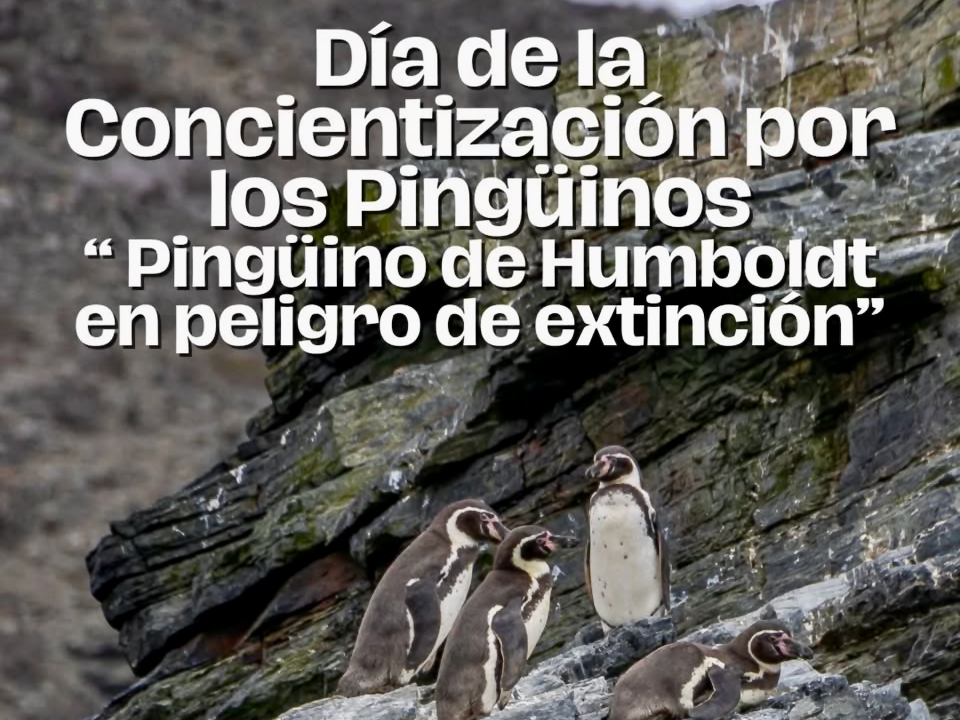
Landau, January 22, 2026. On Penguin Awareness Day on January 20, conservationists and scientists in South America once again provided information about penguins. As on World Penguin Day in April, they drew the public's attention to this fascinating species, a miracle of evolution, and the threat of extinction facing some penguin species.
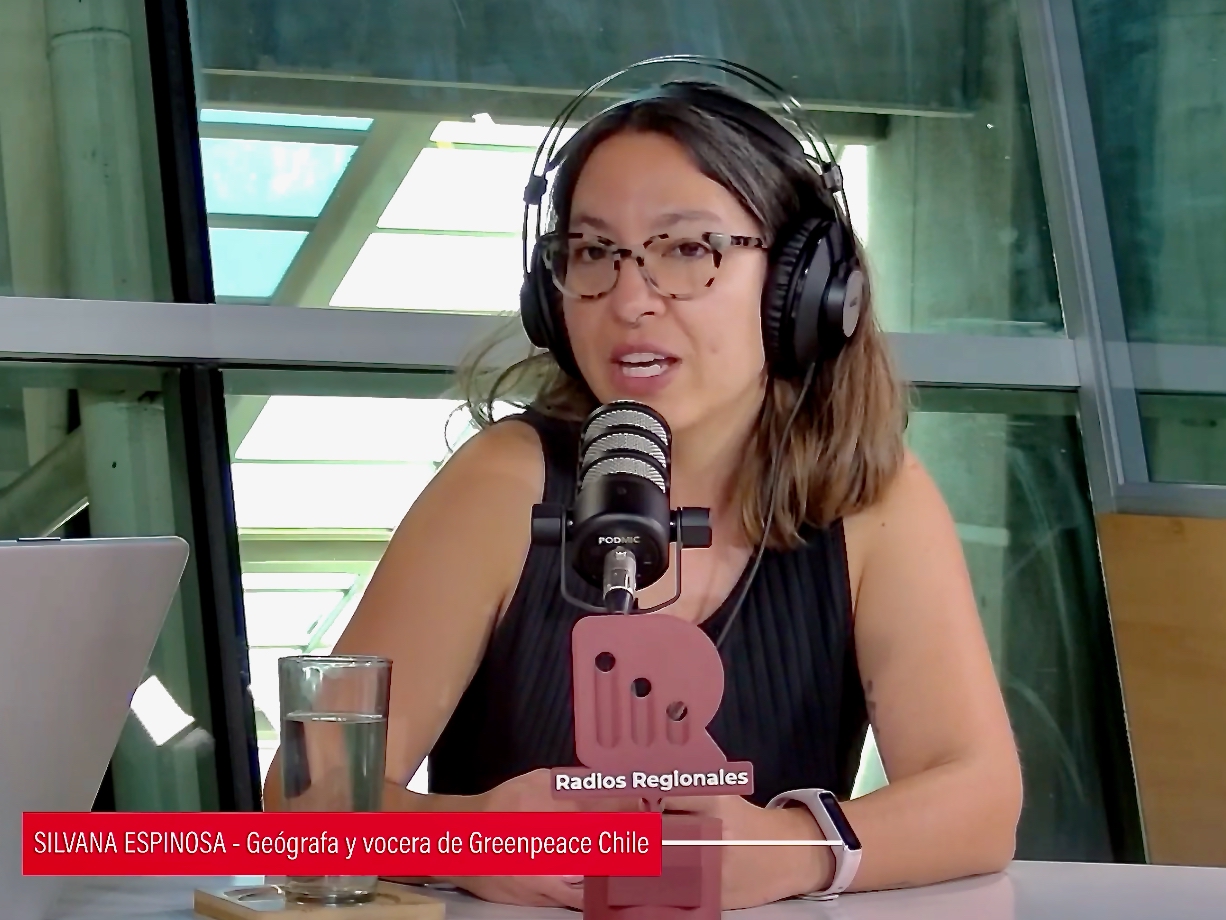
Greenpeace published a press release on Penguin Awareness Day entitled “The Humboldt penguin's habitat is at its limit and cannot withstand any further pressure.” The nonprofit organization pointed to the negative population trend and the worsening threat status, which had to be raised from ‘vulnerable’ (VU) to “endangered” (EN). Silvana Espinosa of Greenpeace (1) said: “In this context, the possible realization of the Dominga project ... takes on an even more critical dimension. The installation of port infrastructure, the increase in ship traffic, the disruption of food routes, and the resulting unrest in the breeding colonies could further worsen the situation of the Humboldt penguin.”
Tourism manager Gabriel Aguilera Orellana (2) emphasized the importance of protecting valuable ecosystems. In the press release, he summed up the necessity and urgency of protection: "The sea is not an inexhaustible pantry, but a living system that requires respect and balance. The existence of penguins on our coasts is a sign of a healthy sea, and that also means life for the communities. When penguins find food, it means that there are also resources for artisanal fishing and families who make their living from this work."
Greenpeace expert Silvana Espinosa shares this opinion and pointed out the important role that Humboldt penguins play in preserving marine ecosystems. She summed it up as follows: "For all these reasons, our message is: Dominga cannot be built in a habitat that is the linchpin of so many species and human communities. ... When we develop measures to protect the Humboldt penguin, we also protect the ecosystem on which human communities and their economic activities depend." (3)
The Fundación Sphenisco Chile used the day as part of an information campaign during the peak tourist season. Using a variety of media, such as large signs in coastal villages, flyers, and Facebook, the foundation informed tourists and those working in tourism about the ecological importance of the Humboldt penguin and its need for protection. Citizens were addressed personally: "Keep a minimum distance of 50 meters and make sure that tourist boats also maintain the required distance. ... If you see a stranded and/or injured penguin, call Sernapesca (the fisheries authority) immediately. ... Support the initiative to declare the Humboldt penguin a ‘natural monument’ with your vote. ... In 2024, the Humboldt penguin was declared the symbolic bird of the Humboldt Current by more than 40 civil society organizations in Chile and Peru. Support and share this and other campaigns. ... Protecting the Humboldt penguin means protecting the ocean. Its future depends on how we behave today." (4)
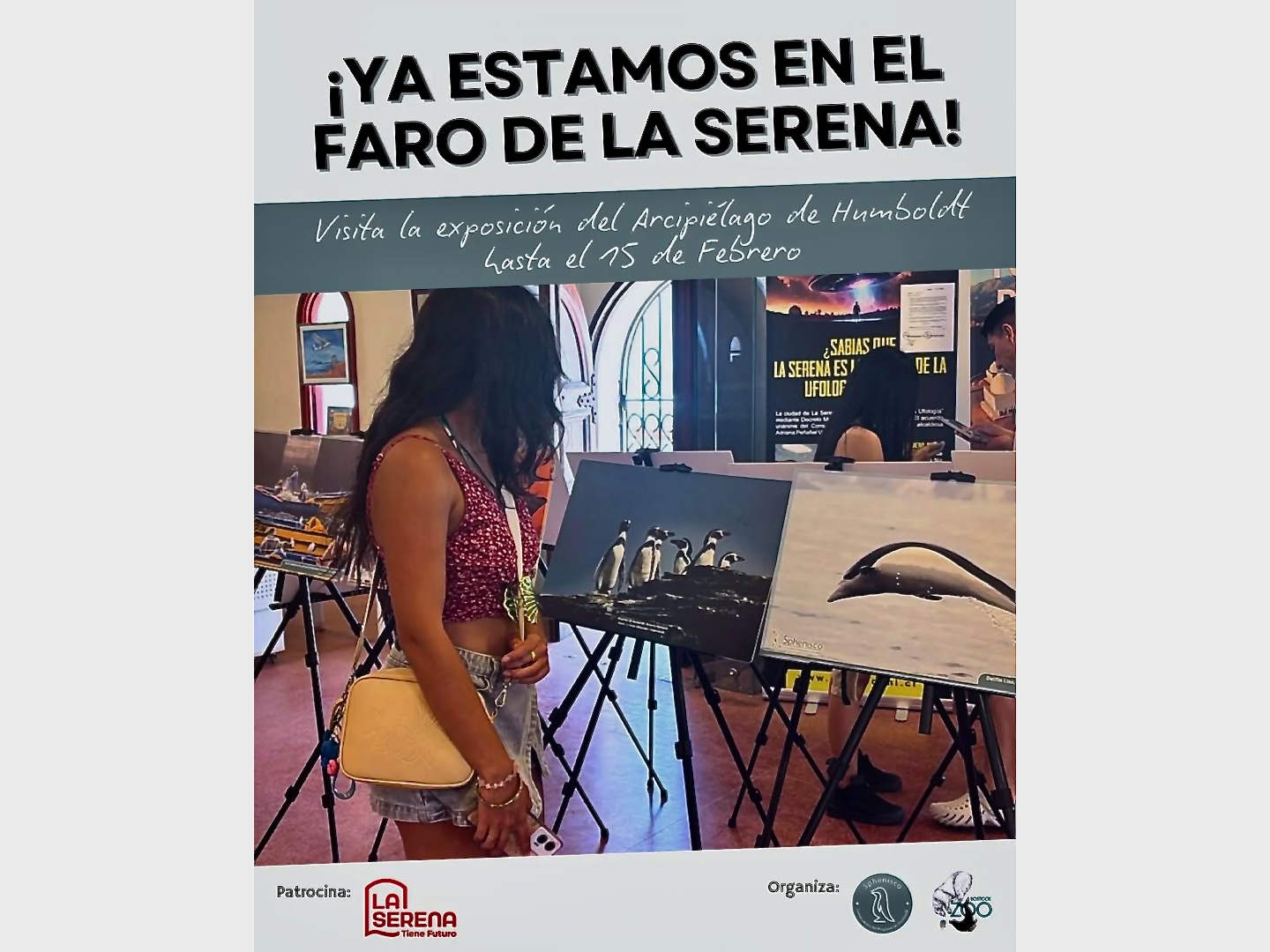
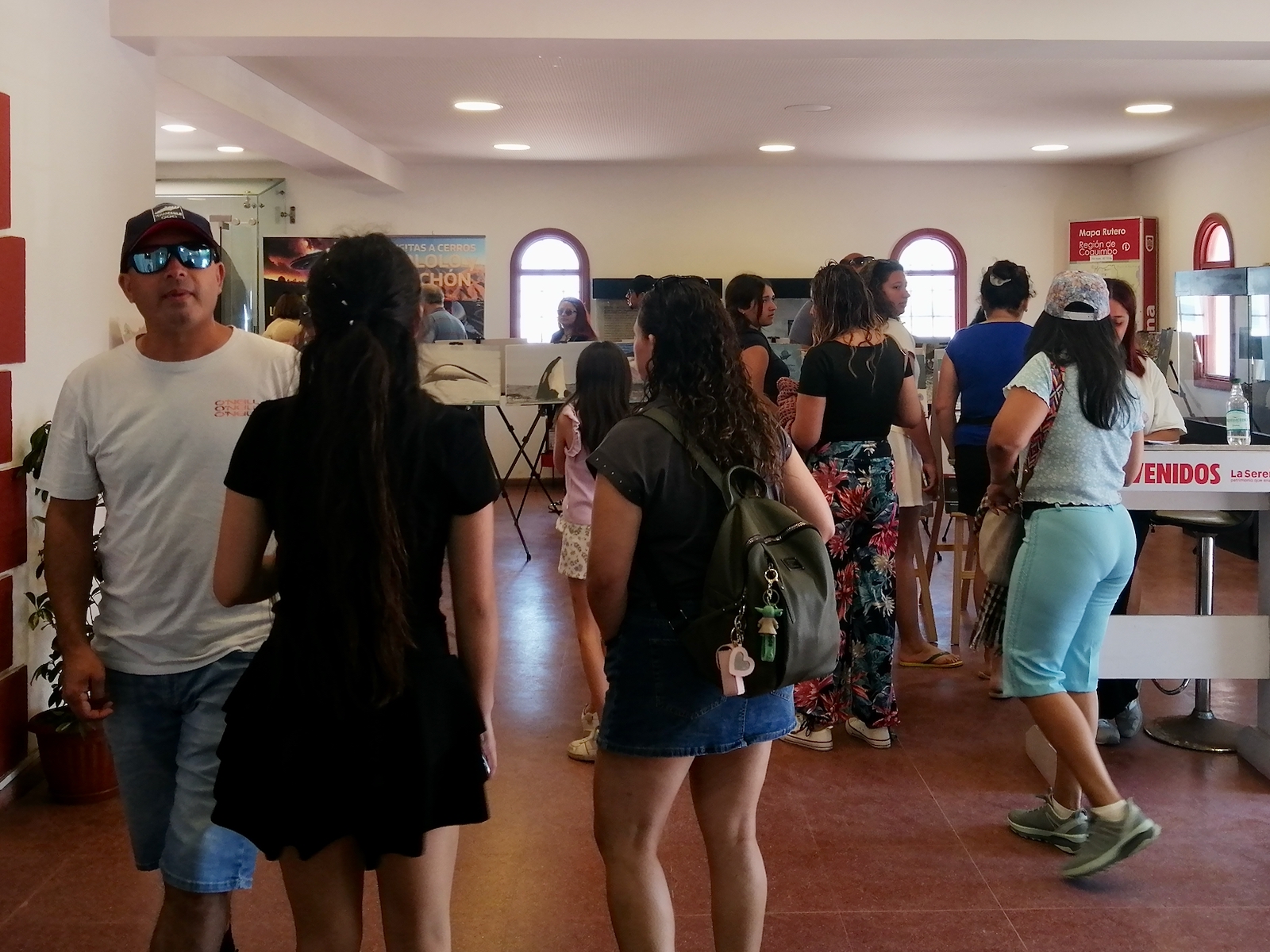
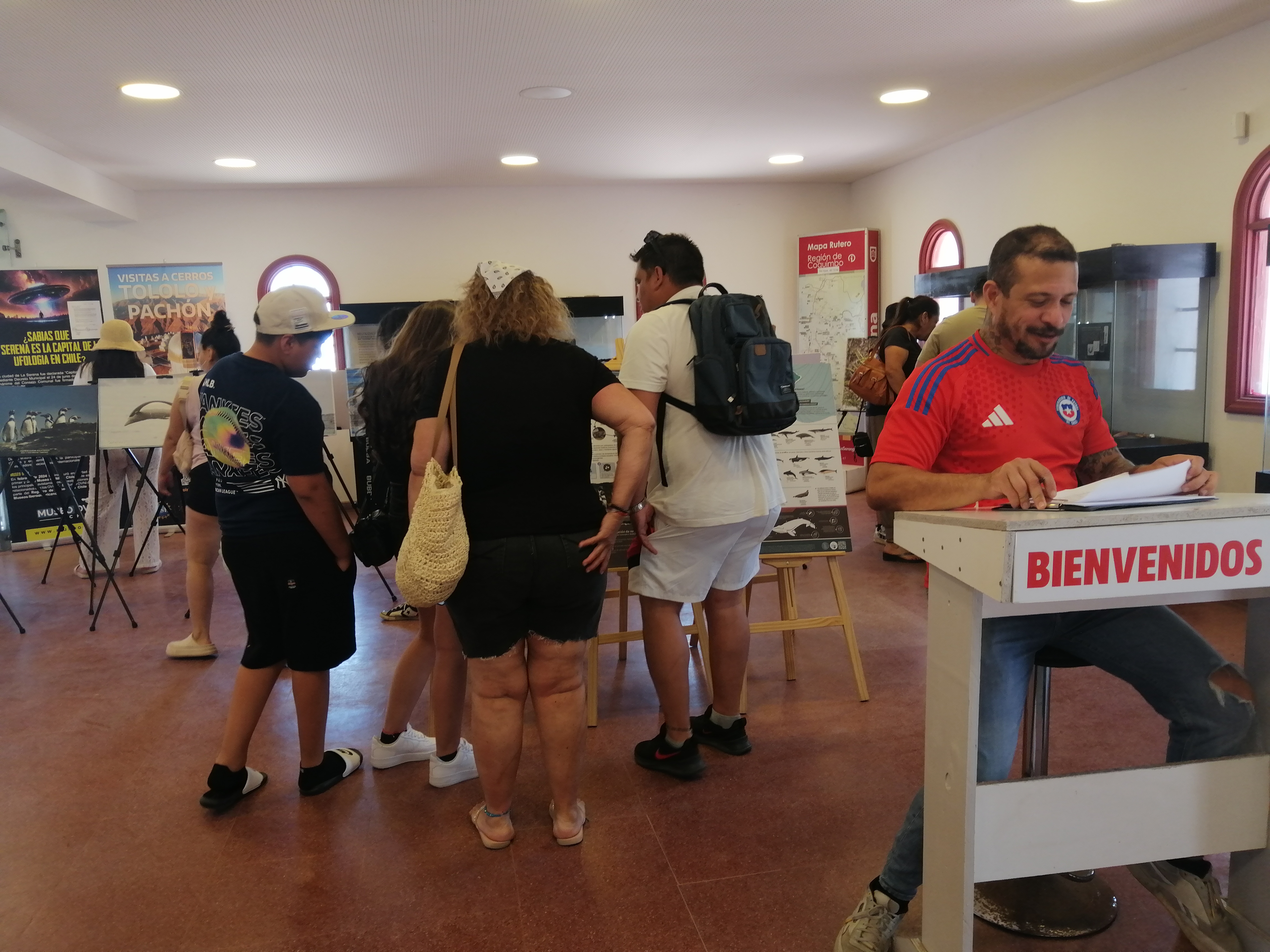
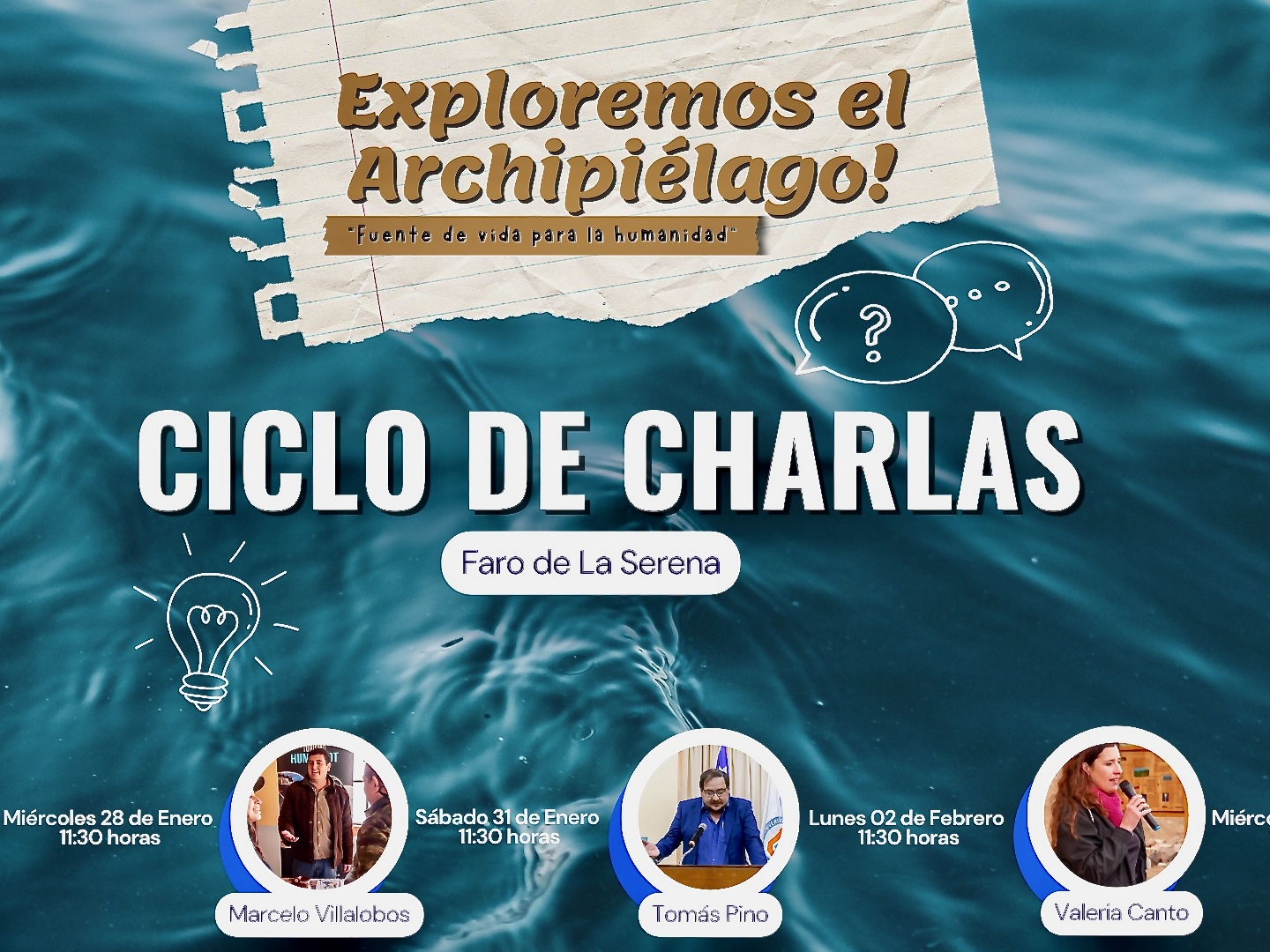
Part of this information campaign is the photo exhibition “Explore the Humboldt Archipelago: Source of Life for Humanity” (5) at El Faro in La Serena. The El Faro lighthouse on Avenida del Mar is the landmark of La Serena and houses a tourist center. For four weeks, photos and infographics will be on display to show why the Humboldt Archipelago is one of the most important hotspots and hope spots for biodiversity in Chile and worldwide. Currently, 900 to 1,000 people visit the photo exhibition every day. The presentation is complemented by four lectures:
Wednesday, January 28
Nancy Duman, President of Sphenisco Chile
The Humboldt penguin, threatened with extinction: challenges of its protection
Saturday, January 31
Marcelo Villalobos, President of the Corporación de Turismo Sostenible de La Higuera (6)
Nature conservation tourism in the Humboldt Archipelago
Monday, February 2
Tomás Pino, President of Conservación Humboldt (7)
Rehabilitation of hydrobiological fauna
Wednesday, February 11
Valeria Canto, teacher and expert at Sphenisco Chile
Whales in the Humboldt Archipelago: Getting to know them in order to protect them
W.K.
Notes
For better readability, the generic masculine form is used in this article. Unless otherwise indicated, the terms used to refer to people in this article apply to all genders.
(1) Silvana Espinosa, climate and ecosystems expert at Greenpeace.
(2) Gabriel Aguilera Orellana, regional tourism manager and secretary of the La Higuera Sustainable Tourism Corporation.
(3) El Comunal La Higuera, January 19, 2026. https://www.elcomunal.cl/comunales/2026/01/19/greenpeace-el-habitat-del-pinguino-de-humboldt-ya-esta-al-limite-no-se-puede-seguir-presionando/
(4) Personal communications Nancy Duman and Facebook Sphenisco Chile.https://www.facebook.com/people/SpheniscoChile-Ong/100076356127078/
(5) The “Photo Exhibition” project is sponsored by Krefeld Zoo.
(6) Association for Sustainable Tourism in La Higuera.
(7) The NGO is dedicated to the conservation of marine animals and operates the marine animal rescue center in Coquimbo.
Translated with deepl.com and checked by Angelika Veelken