12th World Penguin Conference 2026 – Part 1
Nuremberg, September 28, 2026
Part 1:
“What Helps Spectacled and Humboldt Penguins?”
“Why Count Penguins?”
“From Prediction to Preparing Conservation Measures”
“El Niño—Impact on the Breeding Activity and Success of Humboldt Penguins”
From August 31 to September 4, 2026, the 12th International Penguin Conference took place on Phillip Island, Australia, where Sphenisco e.V. was also represented with various presentations. Scientists Dr. Ursula Ellenberg (1) and Dr. Alejandro Simeone (2) gave presentations in which they shared research findings on population size, breeding success, and foraging behavior—research that has been and continues to be supported by Sphenisco e.V. (with assistance from the Species Conservation Foundation of the Karlsruhe Zoo, the Dresden Zoo, and the Friends of Hagenbeck Zoo Association).
Isa Karbstein and Volker Eggert (founding members of Sphenisco e.V.) provided an overview of Sphenisco e.V.’s work in the form of a poster presentation (3). Against the backdrop of the population’s critical decline, they presented and contextualized research findings on population dynamics as well as the public outreach and educational efforts of Acorema in Peru and Fundación Sphenisco in Chile.
Even before the conference officially began, a pre-conference workshop titled “What Works for Banded Penguins? Translating Science into Effective Conservation for African and Humboldt Penguins” (4) took place, with the goal of bringing together researchers and conservation practitioners to synthesize current knowledge about Spheniscus penguins—with a particular focus on African penguins and Humboldt penguins.
Among other things, it was agreed to establish an international working group for the conservation of penguins of the genus Spheniscus to promote ongoing exchange, data sharing, and coordinated conservation measures across national borders. During the conference, Sphenisco e.V. was able to establish contacts with the workshop’s co-organizer, Dr. Susana Cárdenas-Alayza from Peru. Dr. Alejandro Simeone from Chile, as well as scientists conducting research on African penguins, will also be in attendance.
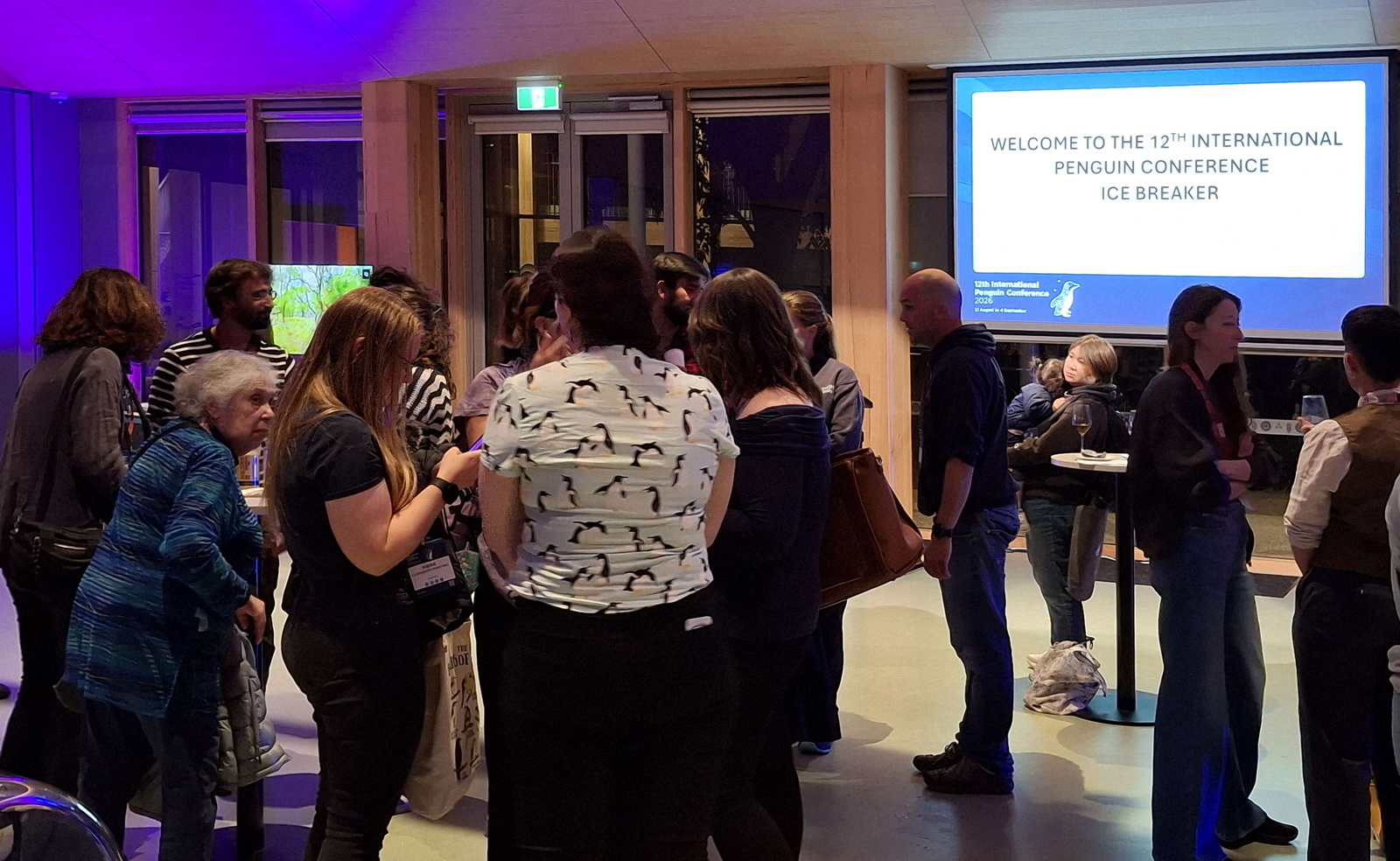
Following a welcome from the organizers, the conference began on the evening of August 30 with an “icebreaker” event designed to help participants get to know one another, network, and establish contacts. Initial discussions took place, for example, with Dr. Susana Cárdenas-Alayza from Peru (see above, “Establishment of an International Working Group”), Robin Cristofari, University of Helsinki (discussion of potential opportunities for “population support” through eggs or chicks of Humboldt penguins from zoos), and Cecilia Durán Gafo and Aurora Fernández Durán from Chile regarding their experiences with species conservation and political advocacy within the framework of the “Reserva Natural Pingüino Rey” in Tierra del Fuego.
Below, Isa Karbstein and Volker Eggert—who represented Sphenisco e.V. at the event—report on the proceedings, the research findings presented, and the conservation measures discussed regarding penguins (see IPC12 program), with a special focus on presentations and insights concerning the Humboldt penguin.
Day 1, August 31, 2026
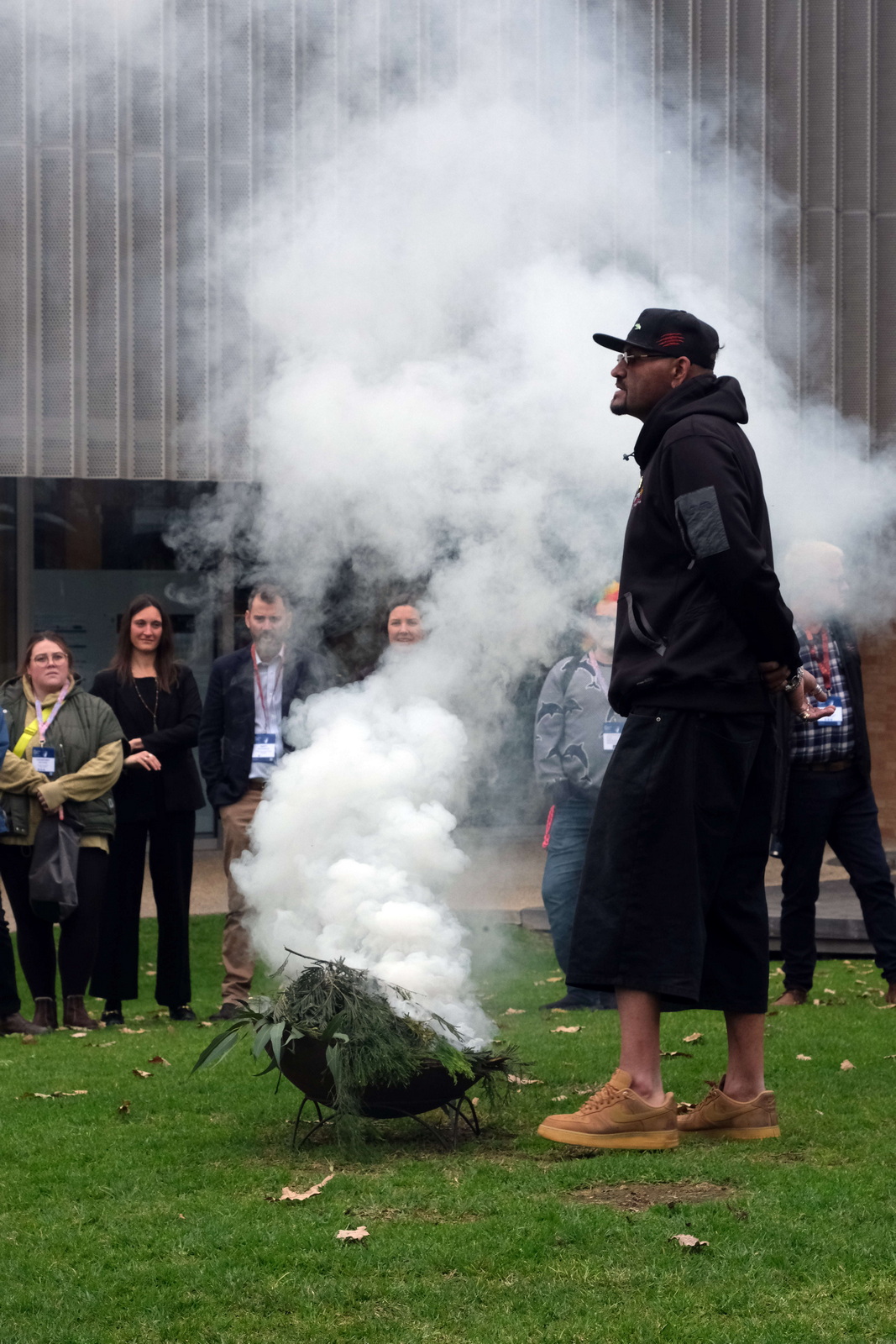
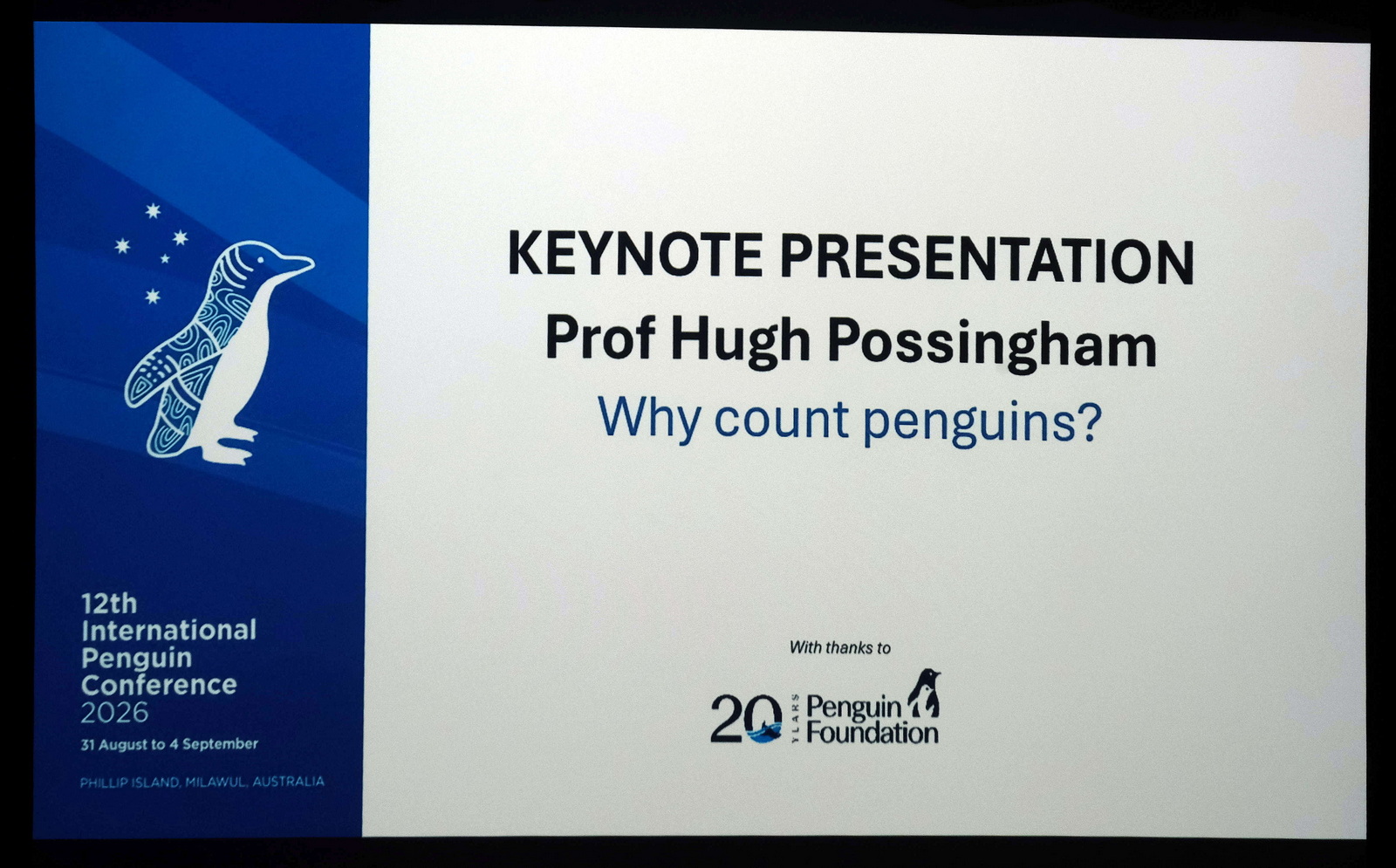
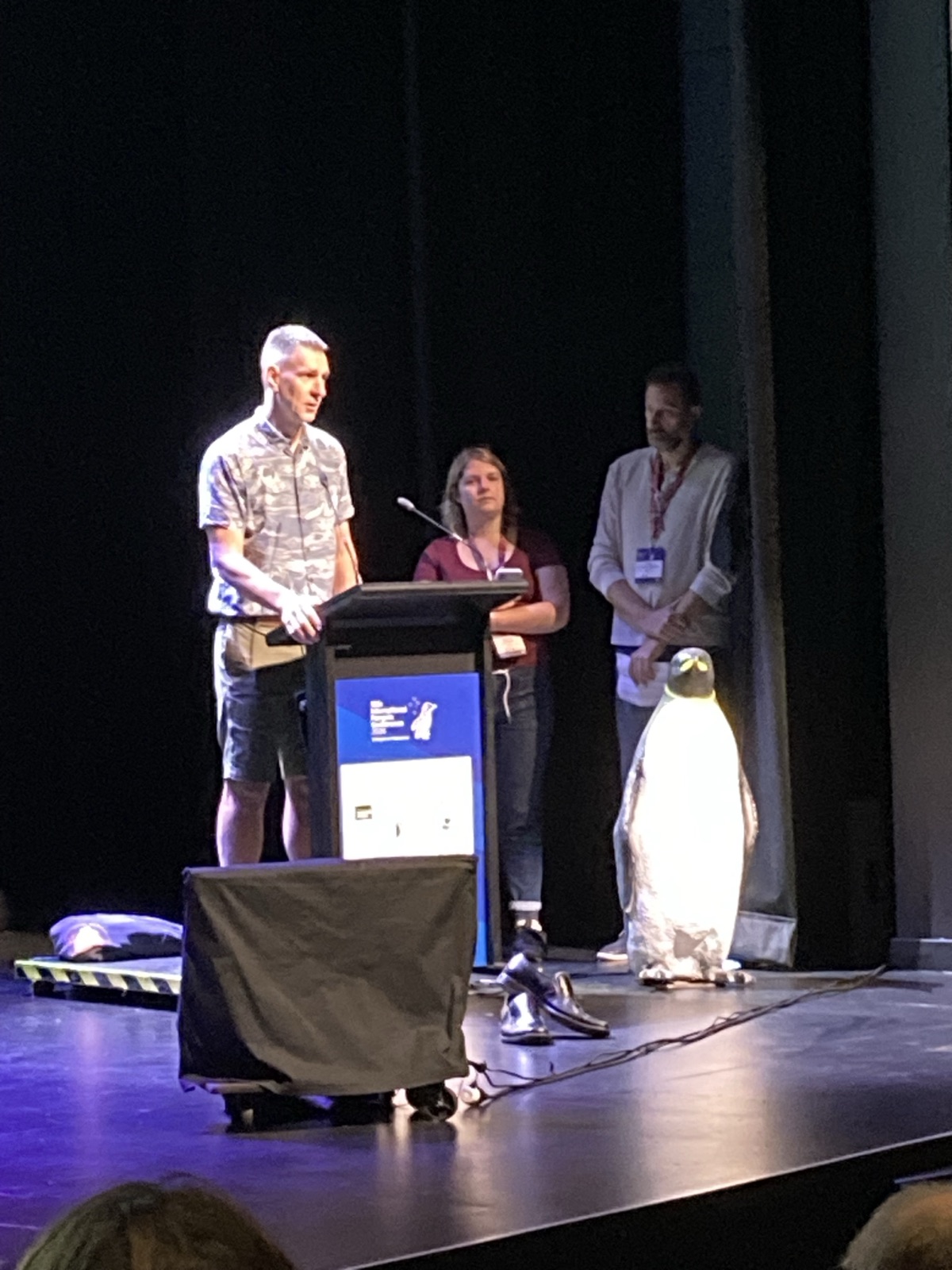
Following a “Welcome to Country & Smoking Ceremony,” the first day of the conference began with a half-hour “keynote presentation” by Prof. Hugh Possingham.
In his presentation, he addressed the interesting and somewhat “provocative” question, “Why count penguins?” (5). The central message of his presentation was that counting penguins should not be an end in itself. Before launching a monitoring program, it should be clear why the data is being collected and how this information will later contribute to better conservation measures, management decisions, or policy actions. Only then can monitoring provide the greatest possible benefit for penguin conservation.
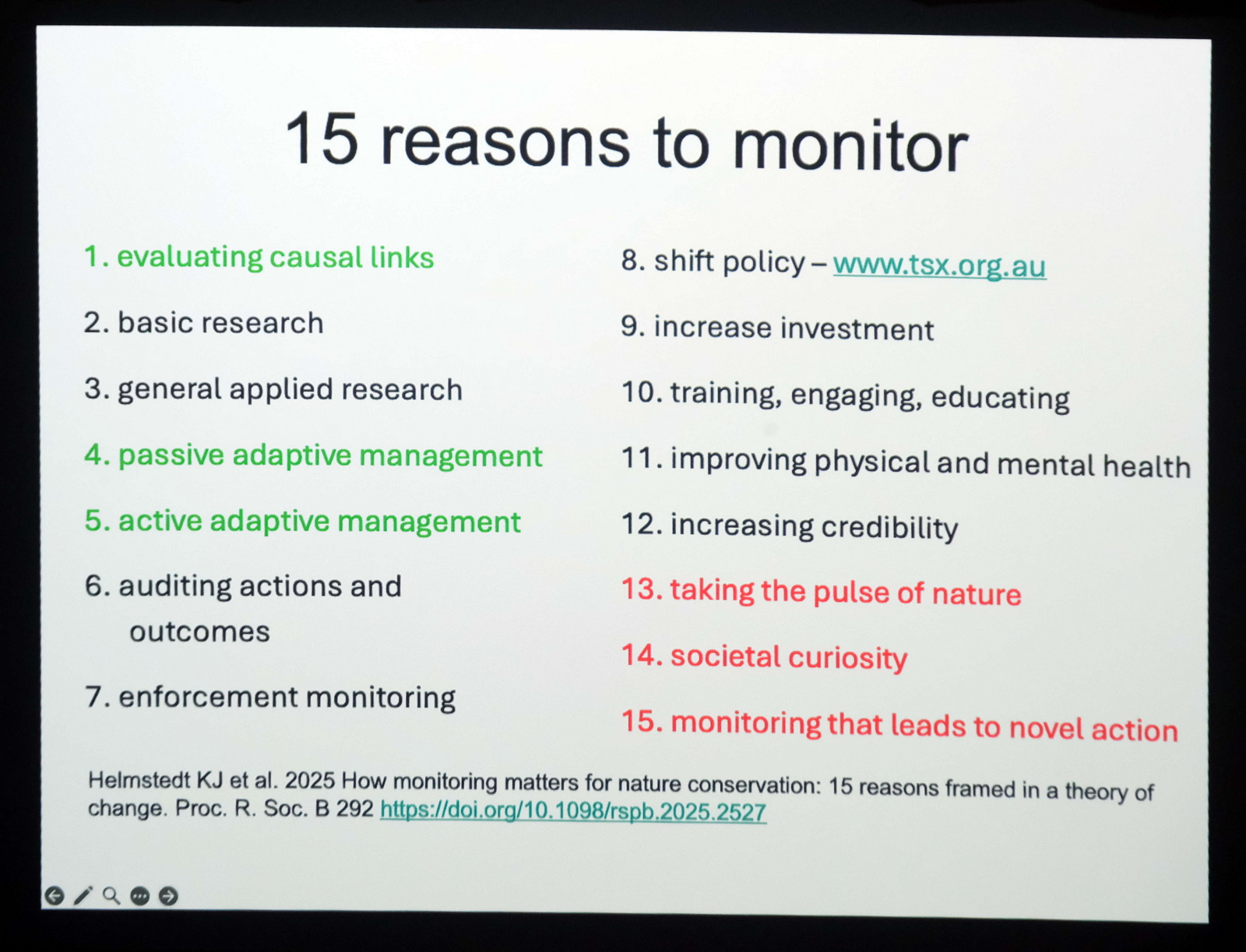
To assess the value of monitoring programs—including in contrast to specific conservation measures—given limited resources, Prof. Possingham provided a checklist of 15 reasons for monitoring that supports a transparent basis for argumentation, informed program design, and a clear link between the collected monitoring data and improved policy or management decisions. This checklist can also be used for future decision-making by Sphenisco e.V. regarding which projects to fund. For example, when deciding whether, given a limited financial budget, to fund a monitoring initiative, a specific conservation or support measure, an educational program, or …
Eine Vielzahl weiterer Vorträge und Präsentationen zu verschiedenen Pinguinarten, Themen und Forschungsergebnissen folgten im ¼ Stundentakt sowie 5-minütige „Lightning Presentations“.
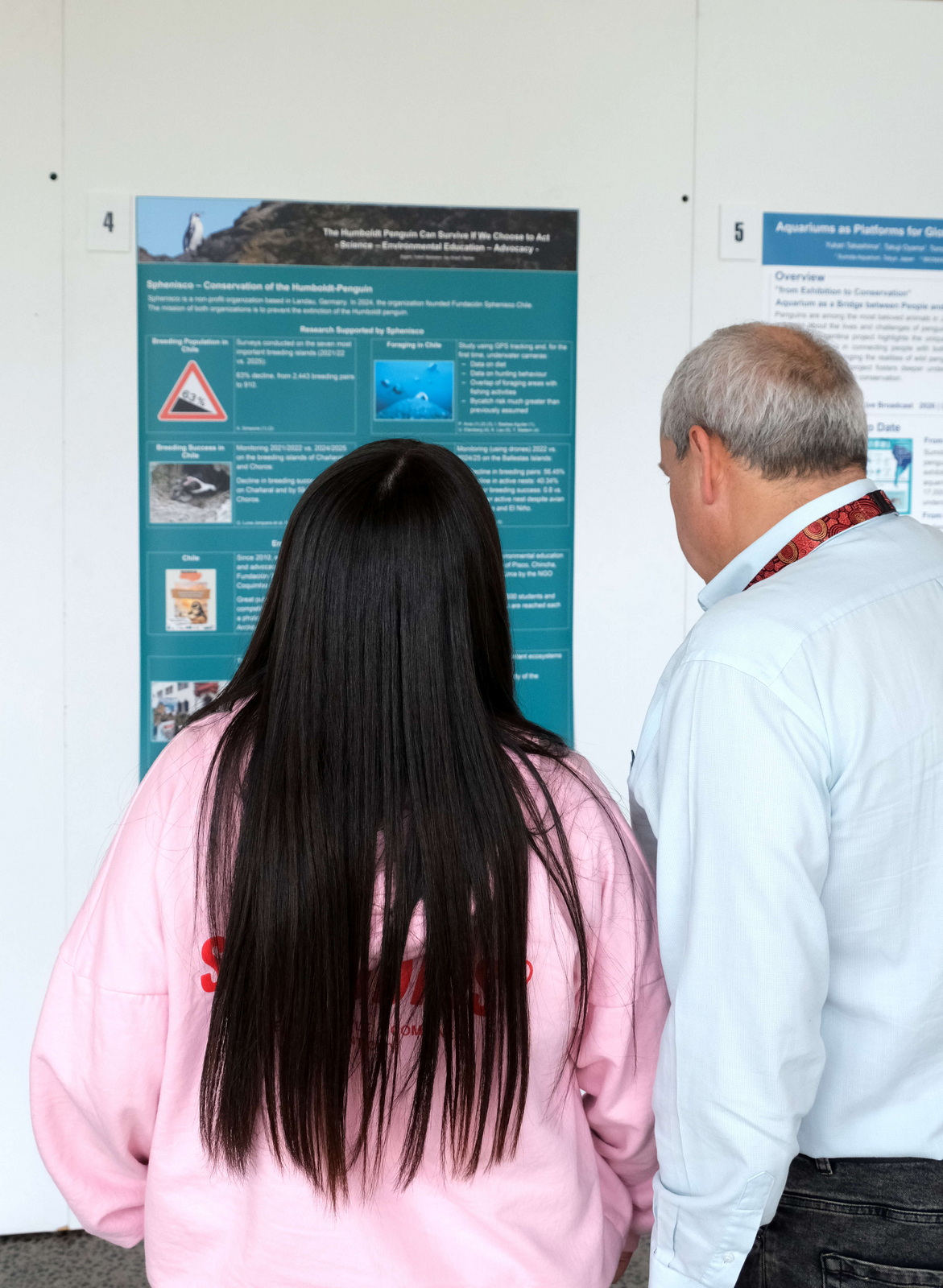
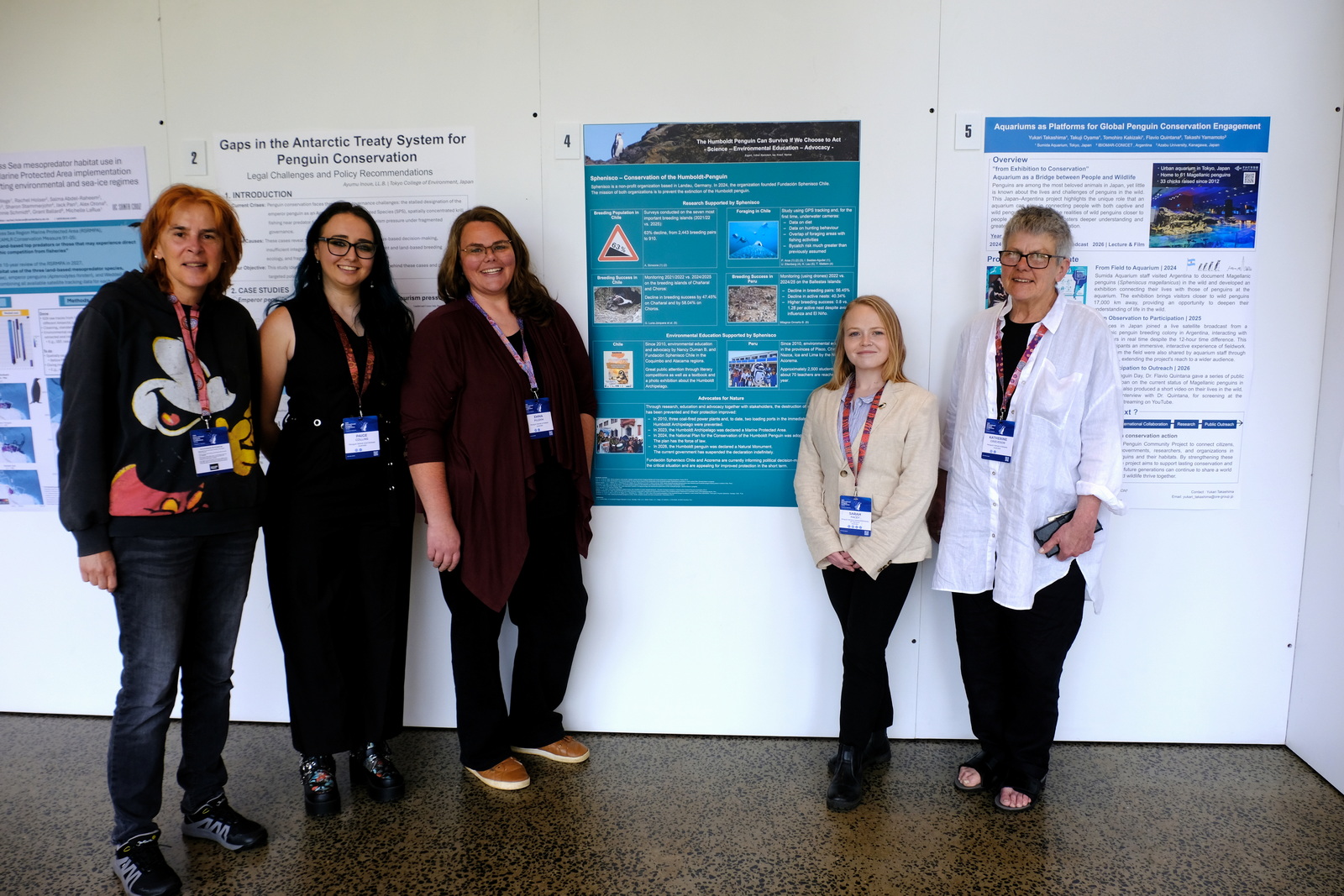
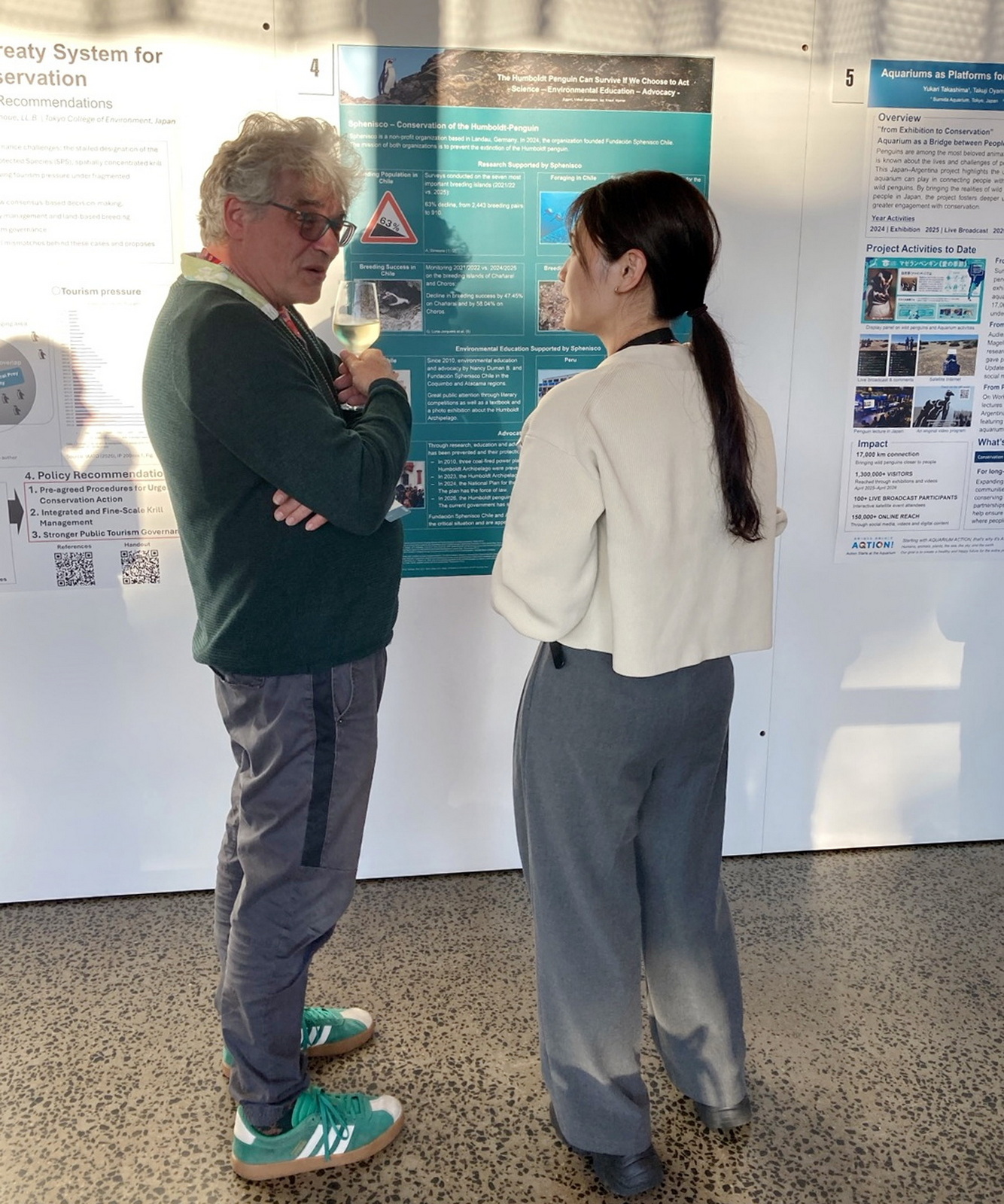
The first day of the conference concluded with an initial “poster session.” Approximately 100 posters were displayed throughout the various rooms, inviting attendees to learn more, discuss, and exchange ideas about the topics presented.
Sphenisco e.V.’s poster was prominently displayed at the front of the exhibition area, allowing us to share information and engage with conference participants from around the world. We had conversations with interested visitors about the organization’s mission, partnerships, activities, history, and achievements. It became clear that Sphenisco e.V. is already well-known and highly regarded in many circles—particularly within the “Latin American penguin community.” Conversations took place with visitors from Chile, Peru, and Argentina, as well as from South Africa, Australia, and other countries. (see poster as PDF file—English / poster as PDF file—German)
Day 2, September 1, 2026
The second day of the conference also began with an exciting “keynote presentation.” In his talk titled “From Prediction to Preparation: Forecasts for Proactive Penguin Conservation” (6), Dr. Alistair Hobday presented the latest advances in seasonal forecasting, which now make it possible to estimate the risk of marine heatwaves in many regions of the world several months in advance.
These forecasts are increasingly better able to support the short-term development of regional response plans and concrete measures that can help mitigate the impacts of intense heat waves. Further restrictions on fishing in relevant areas, the installation of nesting boxes, the collection and incubation of abandoned eggs, and the supplemental feeding of chicks, … could be examples of such short-term support measures for penguins during heat waves.
For penguin researchers as well as conservation managers, early warnings also provide an opportunity to use current temporary heat waves to learn what the future of penguins is likely to look like in 100 years in light of climate change. This allows field research to be organized today for an anticipated future, enabling potential measures to be “tested” and strategies to be developed.
During the subsequent lectures and “lightning presentations,” the focus was not only on little penguins but also, above all, on research into Antarctic and sub-Antarctic penguin species.
Although the overall trend for the vast majority of penguin species—with their declining populations—is dramatic, there are also “climate change winners.” For example, gentoo penguins and their populations in certain regions appear to be benefiting from increasing ice-free areas. Gentoo penguins also appear to be more adaptable in dealing with the consequences of climate change, for example, than other species in the same ranges. King penguins have also succeeded in establishing new breeding grounds; for example, a stable to growing colony has become established in Tierra del Fuego—thanks to effective conservation measures—(see “Reserva Natural Pingüino Rey”).
Overall, however, current projections of population declines for most species—including Humboldt penguins—are alarming, and intensified conservation efforts are absolutely essential if their extinction is to be prevented.
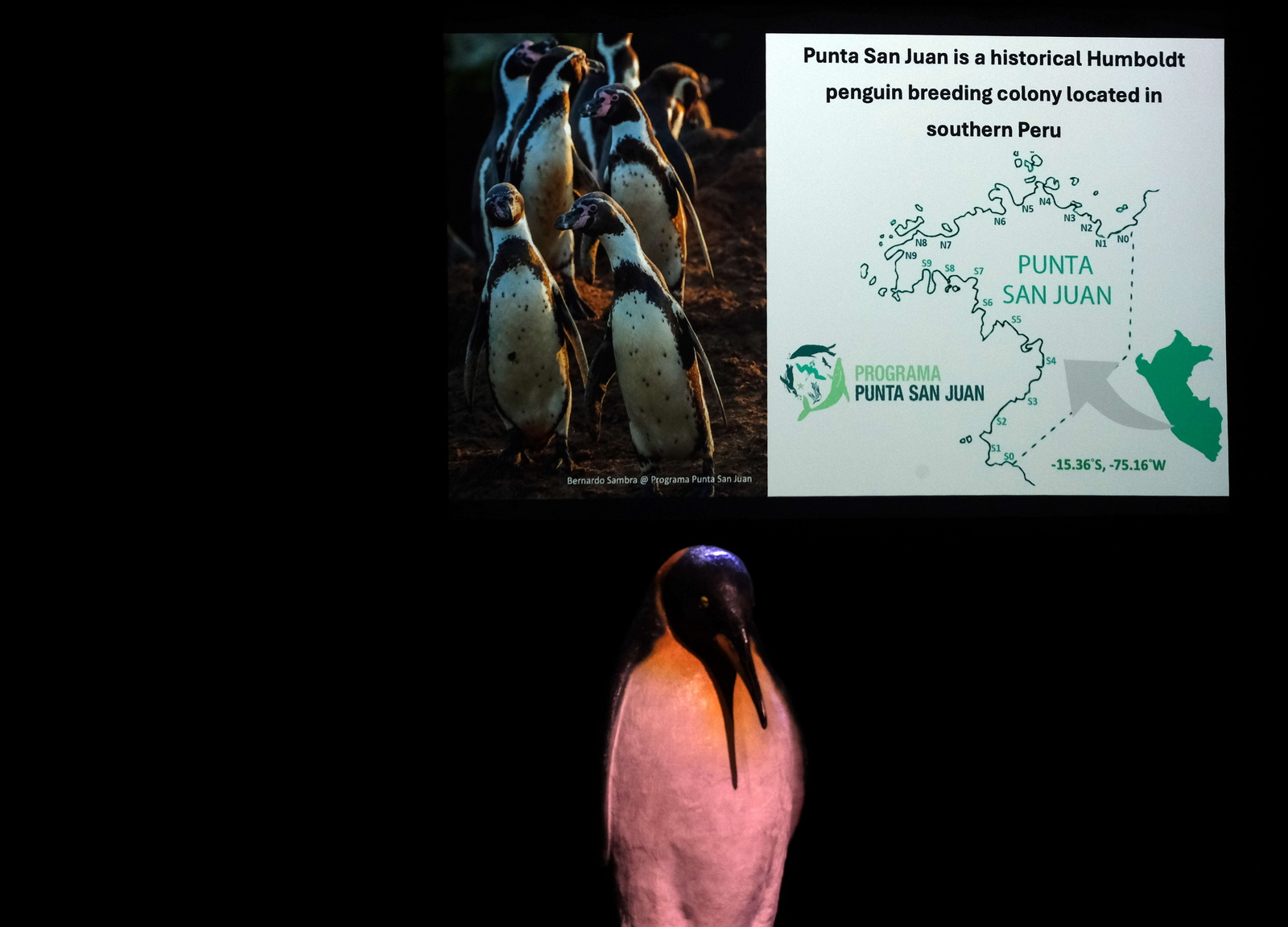
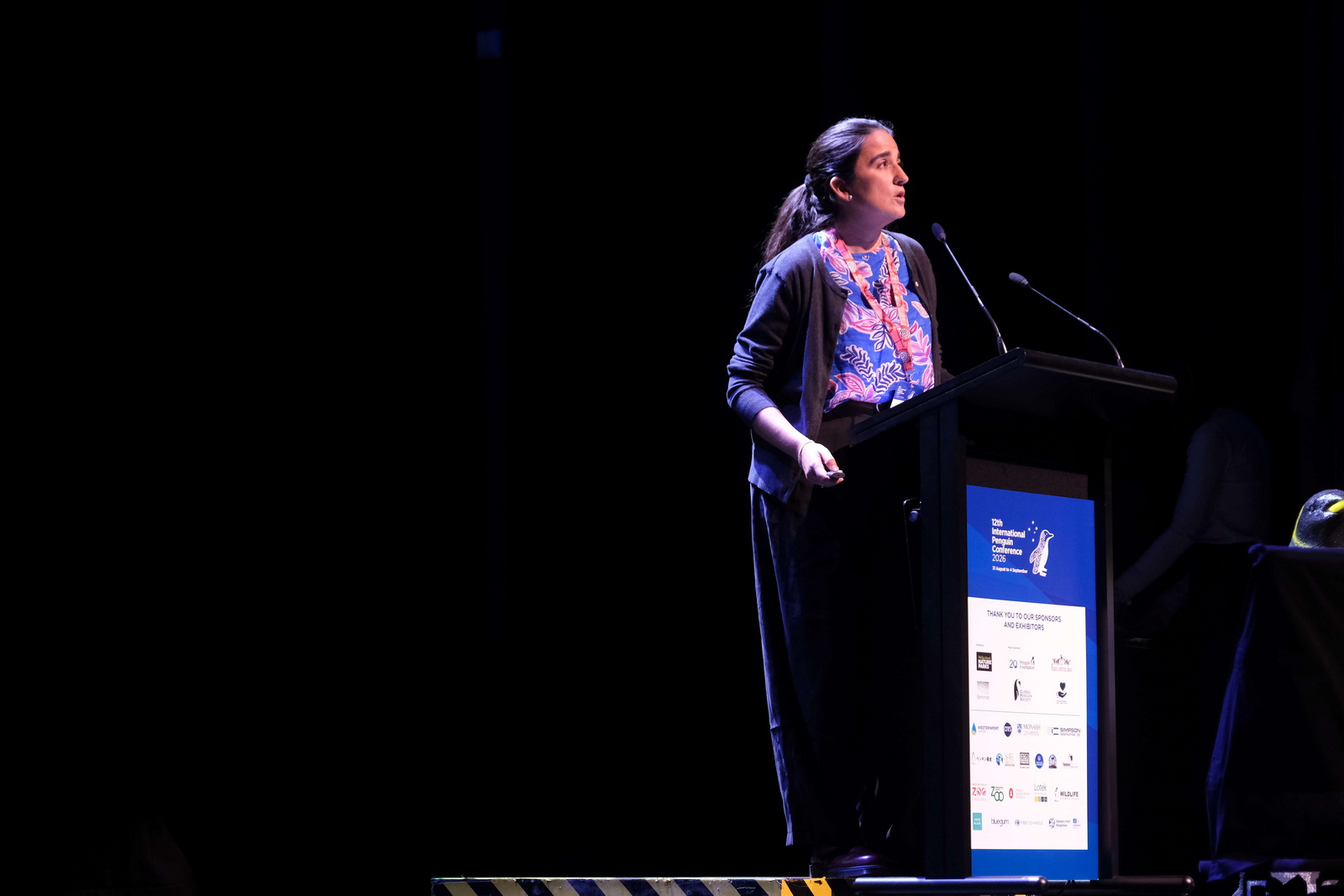
In the first presentation, “Climate Lags Matter: SST Anomalies Drive Stage-Specific Shifts in Humboldt Penguin Breeding” (7), which focused specifically on Humboldt penguins, Dr. Susana Cárdenas-Alayza (Peru) presented research findings on the influence of sea surface temperature anomalies (SSTA) on the breeding activity and success of Humboldt penguins along the Peruvian coast, particularly in San Juan. Fluctuations in sea surface temperature, particularly during El Niño events, alter food availability and impair the reproduction of Humboldt penguins.
Dr. Cárdenas-Alayza analyzed a 25-year dataset on the breeding activity of Humboldt penguins in Peru, including active nests, resting adults, and nests with chicks. The results showed no consistent long-term trend in breeding timing, but strong interannual variability. The start and duration of breeding for active nests and resting adults were significantly associated with SSTA three to six months prior, underscoring the importance of environmental conditions preceding the breeding season. The maximum number of nests with chicks showed a negative correlation with warmer SSTA three to six months prior, suggesting lower reproductive success under warmer conditions.
Understanding these mechanisms is crucial for predicting population dynamics and developing conservation strategies in a rapidly changing marine environment.
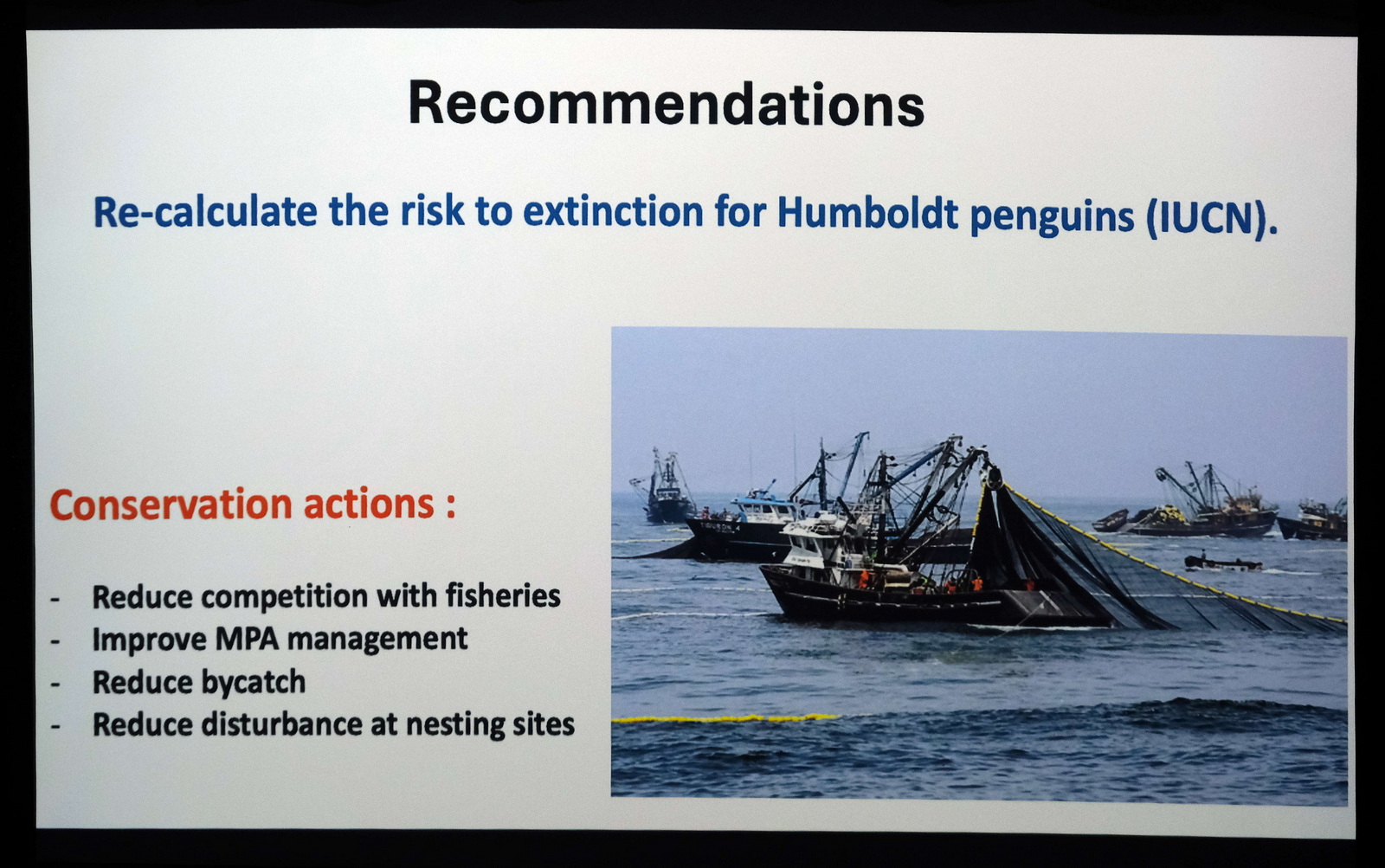
In particular, the onset of the “Super El Niño” in 2026 is a cause for great concern. It is alarming that not only are there currently signs of declining foraging activity, but an unusually high number of dead adult penguins has already been found at the onset of El Niño. Short-term protective measures—ideally on a transnational scale, such as the expansion of fisheries protection zones—are considered urgently necessary.
In addition to the presentations, what was remarkable—and somewhat surprising at first glance—was the very large number of Japanese participants at the conference. Their posters highlighted not only research findings but also the reasons for the particular popularity of penguins in Japan. School projects were presented, as well as a poster that highlighted the enormous variety and prevalence of penguin picture books in Japan and their influence on the significance of penguins in the public consciousness (evidence of the benefits of, for example, educational and public outreach efforts in schools, as promoted by Sphenisco e.V.). The inappropriate treatment of penguins in the past—for example, keeping them as “pets”—also explains the current special interest in penguins and their conservation in Japan.
(Continued in Part 2 with articles on the decline of the Humboldt penguin population in Chile and Peru, news about Humboldt penguins’ foraging behavior, a comparison of methods for counting Humboldt penguins, and an outlook on new technologies for use in penguin research)
Volker Eggert and Isa Karbstein
Notes
(1) Ellenberg, U. 2026. Living with the enemy: Humboldt penguins appear to defy fisheries and coastal development in central Chile. Presentation IPC12 (see “12th World Penguin Conference – Part 2”).
(2) Simeone, A. 2026. Declining Humboldt penguins in Chile: trends, possible causes, and future perspectives. Presentation IPC12 (see “12th World Penguin Conference – Part 2”).
(3) Eggert, V., Karbstein, I., Knauf, W. 2026. Conservation of Humboldt penguins – research, environment, education, advocacy. Poster IPC12—English / Poster IPC12—German).
(4) McGill, P. 2026. What works for banded penguins? Translating science into effective conservation for African and Humboldt penguins. Pre-Conference Workshop IPC12.
(5) Possingham, H. 2026. Why count penguins? Keynote Presentation IPC12.
(6) Hobday, A. 2026. From Prediction to Preparation: Forecasts for Proactive Penguin Conservation. Keynote Presentation at IPC12.
(7) Cárdenas-Alayza, S. 2026. Climate Lags Matter: SST Anomalies Drive Stage-Specific Shifts in Humboldt Penguin Breeding. Presentation at IPC12.
translated by Angelika Veelken using/reviewing deepl.com