Landau, December 5, 2025.
In recent years, the Humboldt penguin population has been reduced by environmental pressures such as climate change, overfishing, habitat destruction, and natural events to an extent that has not yet been fully clarified. In 2023, a large number of seabirds breeding in colonies in South America died from the highly pathogenic H5N1 bird flu. The extent to which Humboldt penguins were reduced by bird flu is unclear, as the dead birds were not examined. The El Niño of 2023/2024 was one of the strongest since records began. Due to a lack of food, Humboldt penguins were unable to breed in large parts of their range in 2023 and 2024.
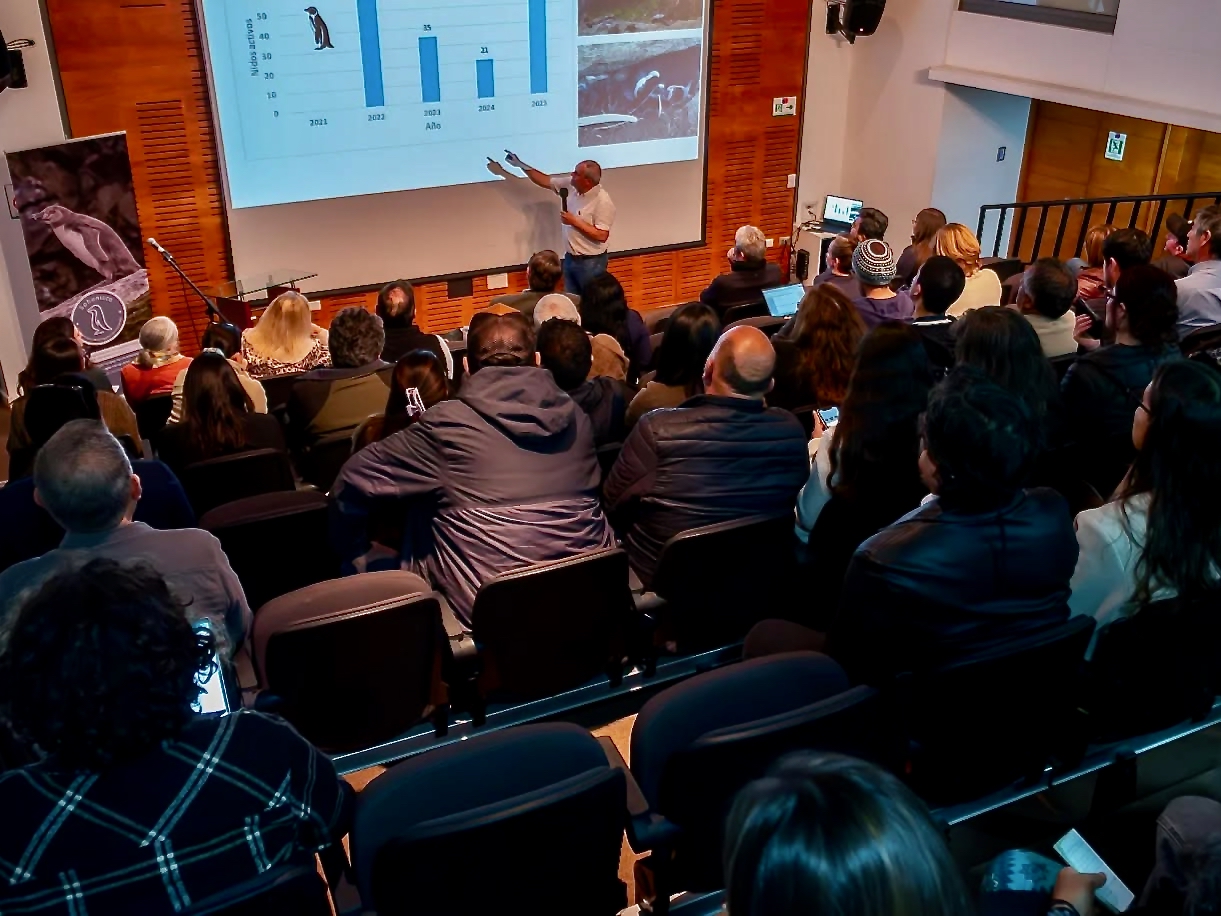
The sharp decline in the population has been documented by counts carried out since 2021 on behalf of Sphenisco by researchers led by Dr. Alejandro Simeone. (1) Dr. Simeone and others reported on the current population of Humboldt penguins in Chile on November 13, 2025, in La Serena. (2)
| isle / number of breeding pairs | 2021 | 2022 | 2023 | 2024 | 2025 |
| Pan de Azucar | 162 | --- | --- | 4 | 13 |
| Grande de Atacama | --- | --- | --- | 10 | 16 |
| Chañaral | 161 | --- | --- | --- | 36 |
| Choros | 381 | 423 | 4 | --- | 41 |
| Tilgo | 571 | --- | 4 | 59 | 200 |
| Cachagua | no value | 729 | 881 | 279 | 400 |
| Pájaro Niño | no value | 62 | 35 | 21 | 39 |
The data does not conclusively document the decline of Humboldt penguins in Chile. However, it does confirm the sharp reduction since 2021.
In January 2025, the annual moulting census in Peru revealed a 70% decline compared to the previous year. Hopefully, this result overestimates the decline. Due to the lack of food, not all Humboldt penguins molted and were therefore not counted. Even if the decline is perhaps not 70%, the census nevertheless confirms a drastic reduction in the population in Peru as well. (3)
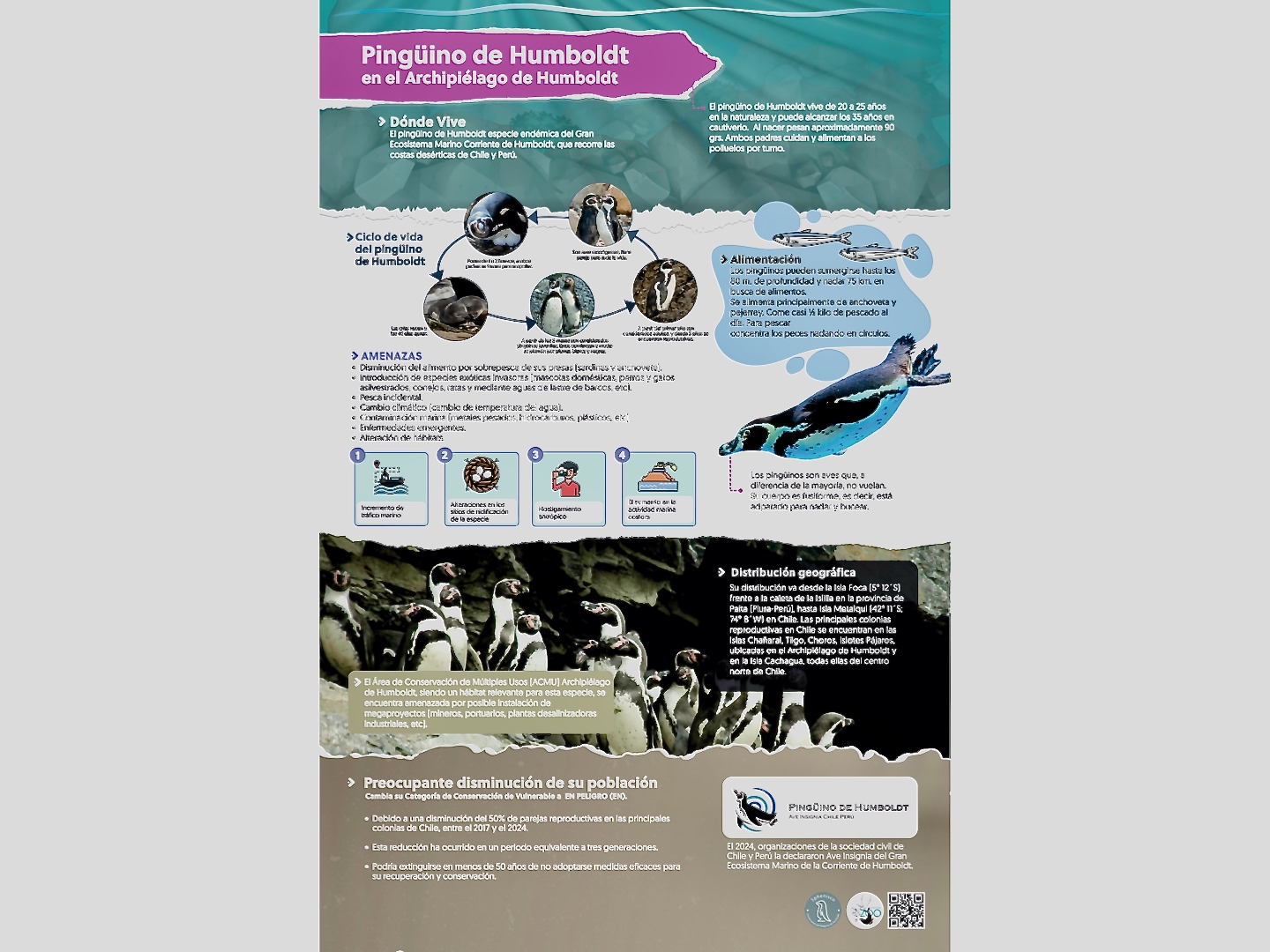
In October 2025, the Chilean government's Council of Ministers for Sustainability and Climate Change raised the threat classification for Humboldt penguins from “vulnerable” (VU) to “endangered” (EN). The classification is based on the “20th Classification Process of Wild Species,” which was carried out by Chilean scientists and experts from the Ministry of the Environment. The process identified a decline of approximately 50% in breeding pairs between 2017 and 2021. The main causes are mortality due to bycatch in small-scale artisanal fisheries, overfishing, and habitat destruction due to human intervention. (4) The classification initially applies to Chile. However, experts point out that the classification is likely to become the global classification in the next update of the Red List of Threatened Species (IUCN classification).
In 2024, the Chilean Ministry of the Environment issued and published the so-called Recoge Plan. (5) The national plan for the conservation of Humboldt penguins obliges state institutions to take the plan's conservation goals and measures into account in their decisions. If the plan's requirements are not observed, e.g., in environmental impact assessments or approvals, this affects their validity.
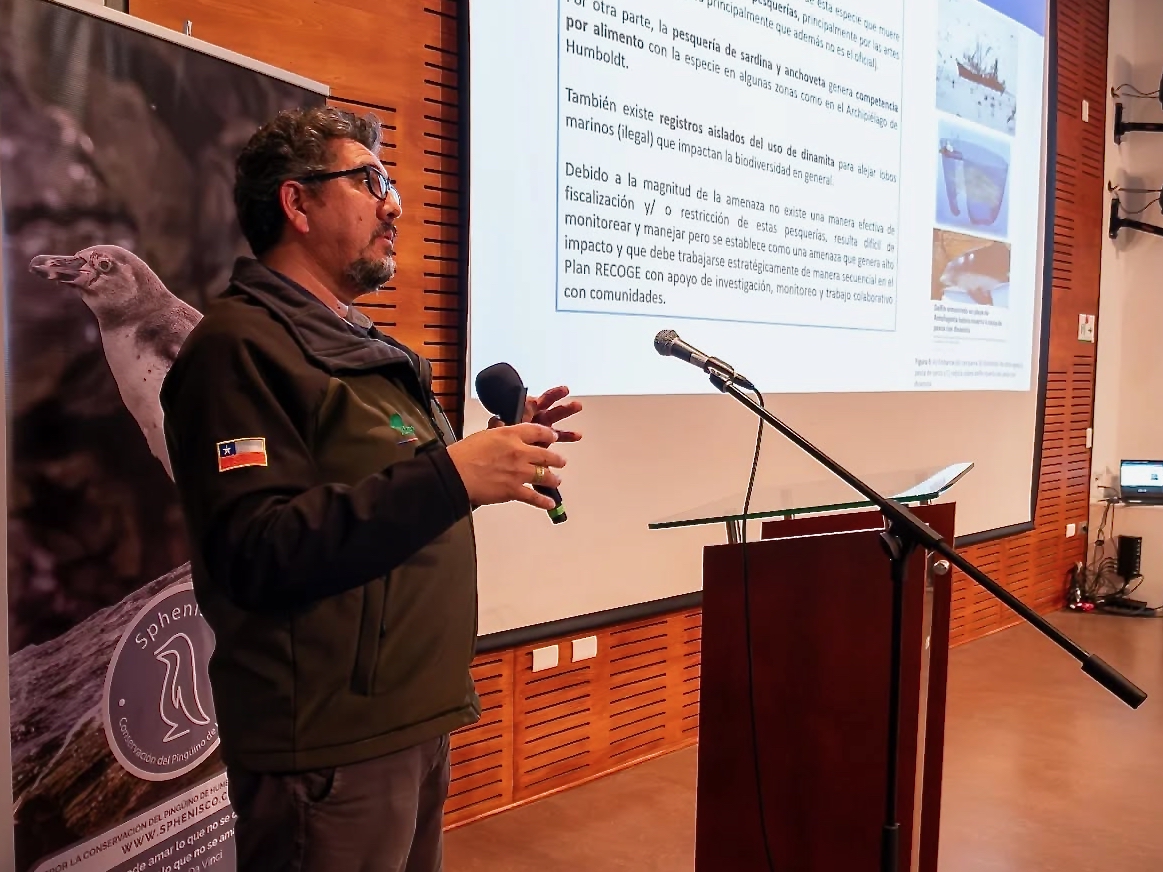
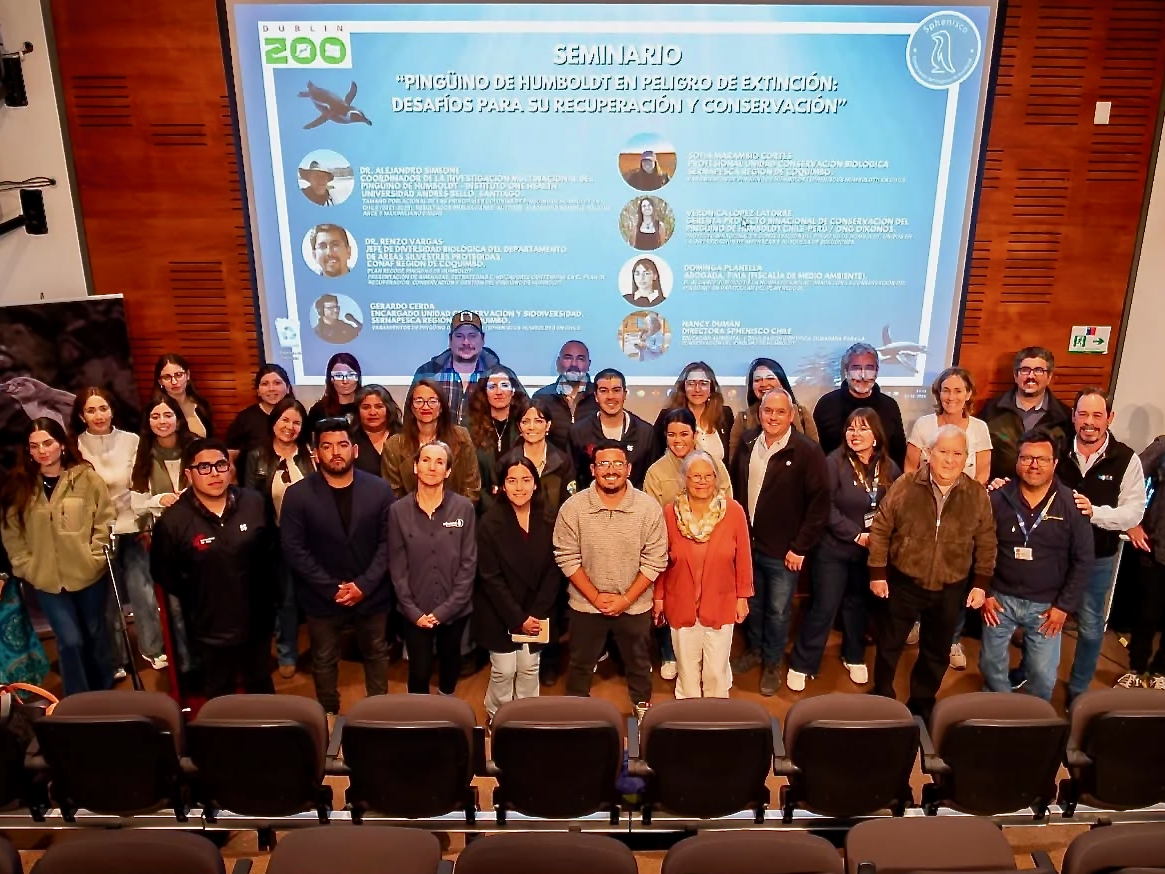
Due to the increased threat to the Humboldt penguin, Fundación Sphenisco Chile organized a symposium on November 13, 2025, entitled “The Humboldt penguin is threatened with extinction: challenges in its rescue.” The meeting brought together renowned researchers, experts, and organizations (6) to reflect on and discuss scientific findings, management strategies, environmental education, and legal challenges for saving the endangered penguin species. The conference was supported by Dublin Zoo.
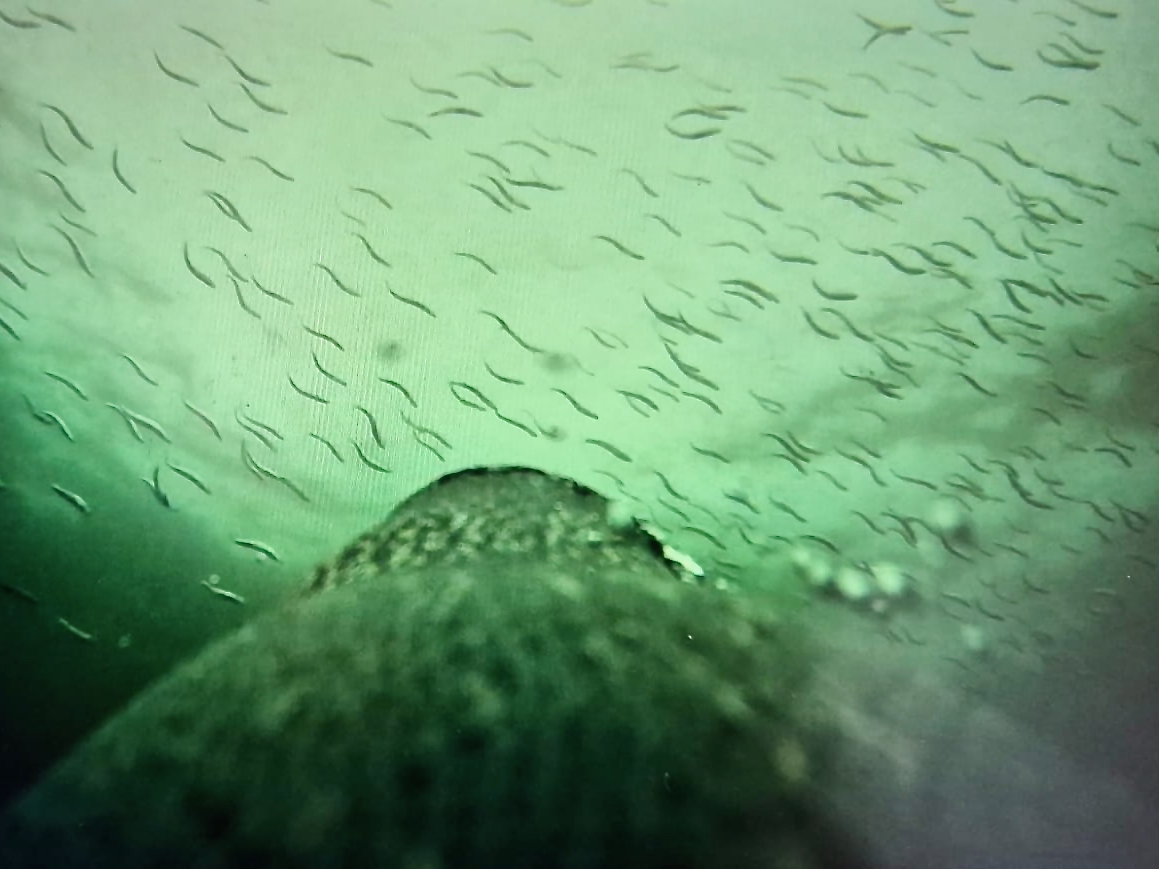
Topics included the alarming state of the population, the goals and measures of the Recoge Plan, the increased number of dead penguins found, research on the interaction between fishing and foraging by Humboldt penguins, and the legal basis for protective measures. In conclusion, Dr. Guillermo Luna made a brilliant plea for scientific basis for (political) decisions: “... Science has the (necessary) information, has made it available to everyone, and the conclusion is clear. What is lacking is not more research, but political will, transparency (...), and the courage to protect what belongs to everyone from short-term economic interests.”
In recent years, Sphenisco has conducted research into population development, breeding success, and foraging, as well as implementing environmental education programs, in line with the Recoge Plan. The association will continue this work and, if financially possible, intensify it. Sphenisco is currently working with Fundación Sphenisco Chile to prepare the following measures:
- A petition to the Chilean authorities to protect unprotected breeding islands, extend the protection of already protected islands, and implement appropriate standards in the Humboldt Archipelago management plan.
- Training and certification of tourism workers in collaboration with partners such as the “La Higuera Sustainable Tourism Association.”
- Continuation of research into the interaction between fishing and foraging, and
- Promotion of sustainable fishing practices to reduce their impact in the vicinity of breeding colonies.
Discussions with Acorema regarding additional measures in Peru are still pending.
The facts about the imminent extinction of Humboldt penguins are well known. Chilean laws and regulations contain clear mandates. It is high time to adequately protect breeding colonies and to take breeding seasons and feeding areas into account when planning and using marine areas.
W. K.
notes
For better readability, the generic masculine form is used in this article. Unless otherwise indicated, the terms used in this article refer to all genders.
(1) Alejandro Simeone, Paulina Arce, Maximiliano Daigre. Population size of the most important colonies of Humboldt penguins in Chile (2021–2025). Symposium November 2025.
Dr. Simeone's research group consists of the aforementioned authors from Andrés Bello University, Santiago; Dr. Guillermo Luna-Joquera, Universidad Católica del Norte, Coquimbo; Dr. Thomas Mattern and Dr. Ursula Ellenberg, University of Otago, New Zealand.
(2) Symposium “The Humboldt penguin is threatened with extinction: challenges for its rescue.” The conference was organized by Fundación Sphenisco Chile and supported by Dublin Zoo.
(3) Article “Population decline – fact or artifact?” dated February 5, 2025, on this website.
(4) Dominga Planella, ONG FIMA. Legal scope of national and international legal instruments, including the Recoge Plan for the protection of the Humboldt penguin. Symposium November 2025.
(5) Recoge Plan. Proposal - Plan for the restoration, conservation, and management of Humboldt penguins. The objectives and measures of the plan have legal force and are binding on public authorities and private individuals.
(6) Experts from CONAF, Sernapesca, ONG Oikonos, and FIMA, among others, participated in the conference.
CONAF. Chilean forestry authority, which is also responsible for nature reserves.
Sernapesca. Chilean fisheries authority.
NGO Oikonos researches and protects endangered ecosystems.
FIMA is a Chilean non-profit NGO that provides legal input on policy, legislation, and access to environmental justice.
translated by Claudia Fawer